
Acrolophus plumifrontella
Clemens, 1859
Eastern Grass-tubeworm Moth, Eastern Grass Tubeworm Moth
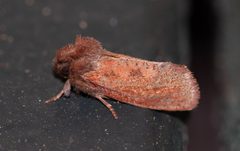
A small in the Acrolophidae, known as the Eastern Grass-tubeworm Moth. have a wingspan of approximately 28 mm and are active from April through October across the eastern and central United States. The refers to the larval habit of constructing silken tubes at the base of grasses. Formerly classified in the family Tineidae, this was reassigned to Acrolophidae based on revised understanding of lepidopteran .
Pronunciation
How to pronounce Acrolophus plumifrontella: //ˌæ.krəˈloʊ.fəs ˌpluː.mɪ.frɒnˈtɛl.ə//
These audio files are automatically generated. While they are not always 100% accurate, they are a good starting point.
Identification
A small with wingspan near 28 mm. Specific diagnostic features for distinguishing A. plumifrontella from other Acrolophus are not documented in available sources. The can be recognized by the reference to grass-tubeworm habits, though this applies to multiple Acrolophus species. are attracted to light.
Images
Habitat
Associated with grassy environments, based on the larval of spinning silken tubes at grass bases or roots. Specific requirements beyond general grassland or lawn habitats are not documented.
Distribution
Eastern and central United States: Alabama, Arizona, Arkansas, Florida, Georgia, Illinois, Indiana, Iowa, Kansas, Kentucky, Louisiana, Maryland, Mississippi, Missouri, New Jersey, New York, North Carolina, Ohio, Pennsylvania, South Carolina, Tennessee, Texas, Virginia, and Vermont.
Seasonality
active from April to October, with peak activity during warmer months.
Life Cycle
Complete with , larva, pupa, and stages. Larvae construct silken tubes at the base of grasses or at grass roots for concealment while feeding. Specific details on egg deposition, site, or number of per year are not documented.
Behavior
are and attracted to artificial light sources. Larvae are concealed feeders, remaining within silken tubes during feeding.
Ecological Role
Larvae feed on grasses, likely functioning as primary consumers in grassland and lawn . Specific ecological impacts or interactions are not documented.
Human Relevance
Attracted to residential porch lights and blacklights, making it a frequent observation during -watching activities. Not documented as an agricultural or economic pest.
Similar Taxa
- Acrolophus popeanellaAlso a grass tubeworm moth with similar larval habits and ; distinguished by distribution and subtle morphological differences not specified in available sources
- Other Acrolophus speciesMultiple share the grass-tubeworm ; -level identification typically requires examination of genitalia or other microscopic features