
Acrolophus mycetophagus
Davis, 1990
Frilly Grass Tubeworm Moth
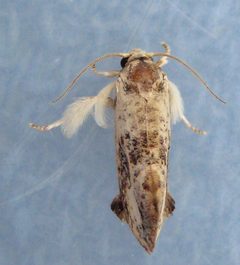
A small in the Acrolophidae, described by Donald R. Davis in 1990. The "Frilly Grass Tubeworm Moth" reflects its membership in a whose larvae construct silken tubes at grass bases or roots. The occurs in the southeastern United States and has a wingspan of 16–17 mm.
Pronunciation
How to pronounce Acrolophus mycetophagus: /ˌæk.rəˈlɒ.fəs mɪˌsiːtəˈfəʊɡəs/
These audio files are automatically generated. While they are not always 100% accurate, they are a good starting point.
Images
Distribution
Southeastern United States: Virginia south to Florida, west to Texas. Records include Alabama, Georgia, Louisiana, Mississippi, North Carolina, South Carolina, and Tennessee.
Diet
Larvae are thought to feed on fungi.
Similar Taxa
- Acrolophus popeanellaAnother grass tubeworm moth with similar and appearance; larvae also construct silken tubes at grass bases.
- Other Acrolophus speciesShare the 'grass tubeworm moth' and larval habit of spinning silken tubes at grass bases or roots; -level identification requires detailed examination.
More Details
Taxonomic history
The Acrolophus was formerly placed in the Tineidae (clothes moths and kin) but is now classified in Acrolophidae. The family Acrolophidae is sometimes still referenced as Tineidae in older sources.
Etymology
The specific epithet 'mycetophagus' derives from Greek roots meaning 'fungus-eating,' consistent with the reported larval diet.