
Acrolophus forbesi
Hasbrouck, 1964
Forbes' Grass Tubeworm Moth
Acrolophus forbesi is a small in the Acrolophidae, commonly known as grass tubeworm moths. It was described by Hasbrouck in 1964 and occurs in the southeastern United States. The has a wingspan of approximately 17 mm. Like other members of its , the caterpillars likely construct silken tubes at the base of grasses or grass roots for concealment while feeding.
Pronunciation
How to pronounce Acrolophus forbesi: /æˈkroʊləs fɔːrˈbeɪsaɪ/
These audio files are automatically generated. While they are not always 100% accurate, they are a good starting point.
Identification
The Acrolophus can be recognized by the "grass tubeworm moths," referring to the larval habit of spinning silken tubes. -level identification within the genus requires examination of genitalia or other microscopic features; visual identification from photographs alone is generally not reliable.
Images
Appearance
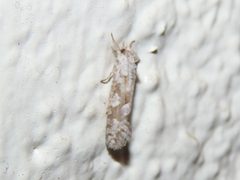
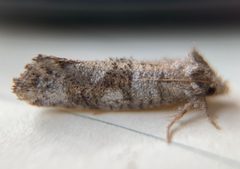
Small with a wingspan of approximately 17 mm. Specific coloration and pattern details for this are not documented in available sources.
Habitat
Associated with grassland or grassy , inferred from the -level and larval of related . Specific habitat preferences for A. forbesi are not documented.
Distribution
Southeastern United States: Alabama, Florida, Georgia, Louisiana, Mississippi, South Carolina, and Texas.
Life Cycle
Complete with , larva, pupa, and stages. Larval stage constructs silken tubes at grass bases or roots for concealment during feeding, based on -level characteristics.
Behavior
are and attracted to artificial light sources. Specific behavioral observations for A. forbesi are not documented.
Ecological Role
Larvae are herbivores feeding on grasses; may contribute to nutrient cycling in grassland . Specific ecological impacts are not documented.
Human Relevance
No documented economic or medical significance. Not known to be a pest .
Similar Taxa
- Other Acrolophus speciesMany in the are morphologically similar and require dissection or analysis for definitive identification. A. forbesi is distinguished by its southeastern U.S. distribution and was described specifically from this region.
- Tineidae (clothes moths and relatives)Acrolophidae was formerly placed within Tineidae, and members of both are small, dull-colored with similar overall appearance. Acrolophidae is now recognized as a separate family based on phylogenetic studies.
More Details
Taxonomic History
The Acrolophidae was formerly classified within Tineidae. Recent phylogenetic studies have supported its recognition as a distinct family, though some sources still list it under Tineidae.
Etymology
The specific epithet 'forbesi' likely honors an entomologist or naturalist, though the namesake is not specified in the original description.