Dryadaula terpsichorella
(Busck, 1910)
dancing moth, Hawaiian Dancing Moth
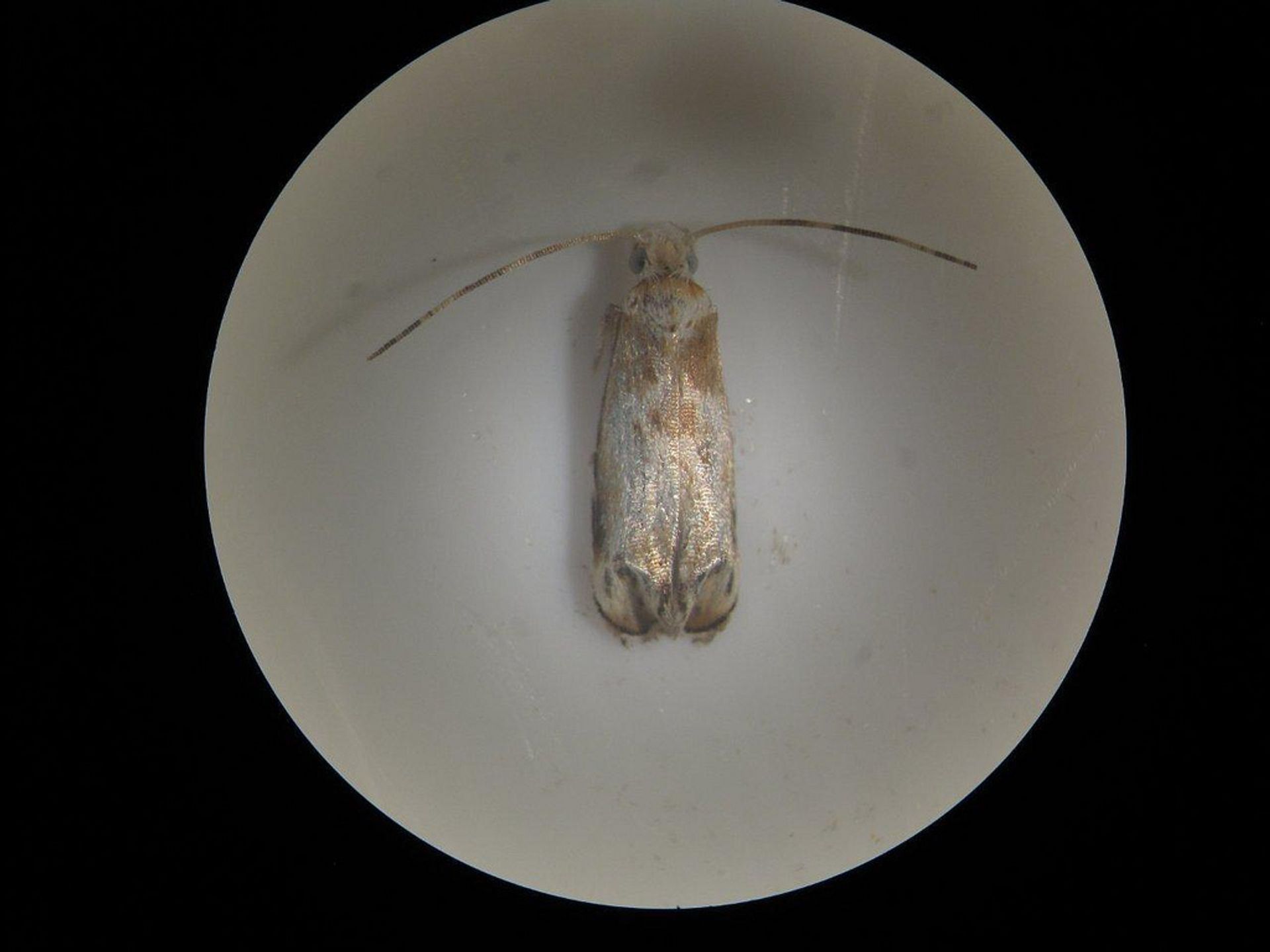
Dryadaula terpsichorella is a small known for its distinctive dancelike movements upon landing. Native to south-eastern Polynesia, Samoa, and Fiji, it has established in Hawaii, Florida, and California. The was first described by August Busck in 1910. It is commonly called the "dancing moth" or "Hawaiian Dancing Moth" due to its characteristic behavioral display.
Pronunciation
How to pronounce Dryadaula terpsichorella: /draɪəˈdaʊlə tɜːrpsɪˈkɔːrɛlə/
These audio files are automatically generated. While they are not always 100% accurate, they are a good starting point.
Identification
The is distinguished by its characteristic gyrating movements when alighting, which give rise to its . Specific morphological features for field identification are not documented in available sources.
Images
Habitat
Larvae have been found among dead leaves and on living plant material. Documented plants include banana, Costus spicatus, ferns, Pandanus, pineapple, and sugarcane.
Distribution
Native to south-eastern Polynesia, Samoa, and Fiji. Introduced to Hawaii, Florida, and California.
Host Associations
- banana - larval larvae found on plant parts
- Costus spicatus - larval larvae found on plant parts
- ferns - larval larvae found on plant parts
- Pandanus - larval larvae found on plant parts
- pineapple - larval larvae found on plant parts
- sugarcane - larval larvae found on plant parts
Behavior
Performs characteristic dancelike gyrations when alighting. This is the source of both for the .
More Details
Family Classification Note
Sources differ on placement: Wikipedia lists Tineidae, while GBIF, NCBI, and Catalogue of Life place it in Dryadaulidae. The behavioral study references Dryadaulinae.