Schreckensteinia festaliella
(Hübner, 1819)
Blackberry Skeletonizer
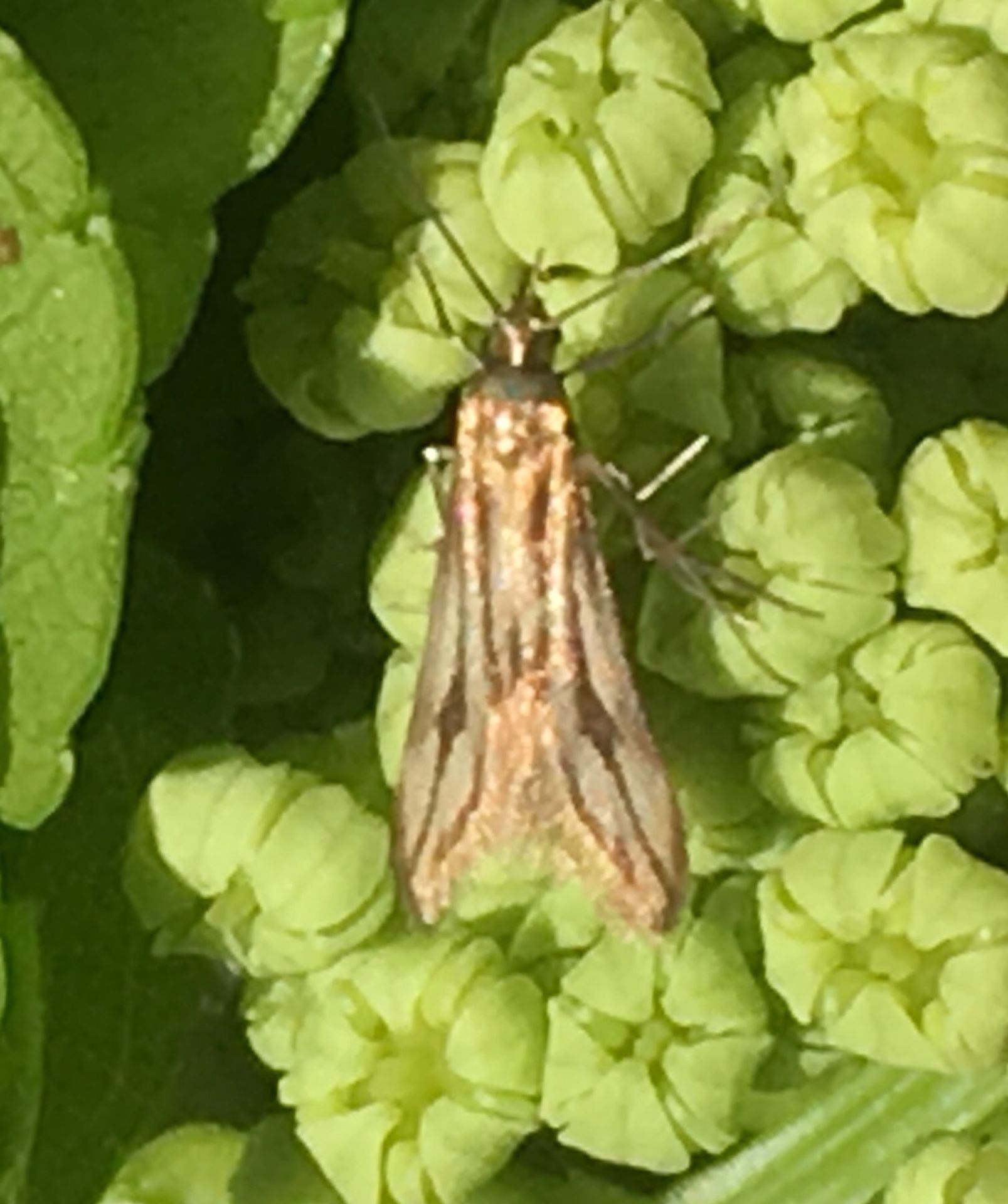
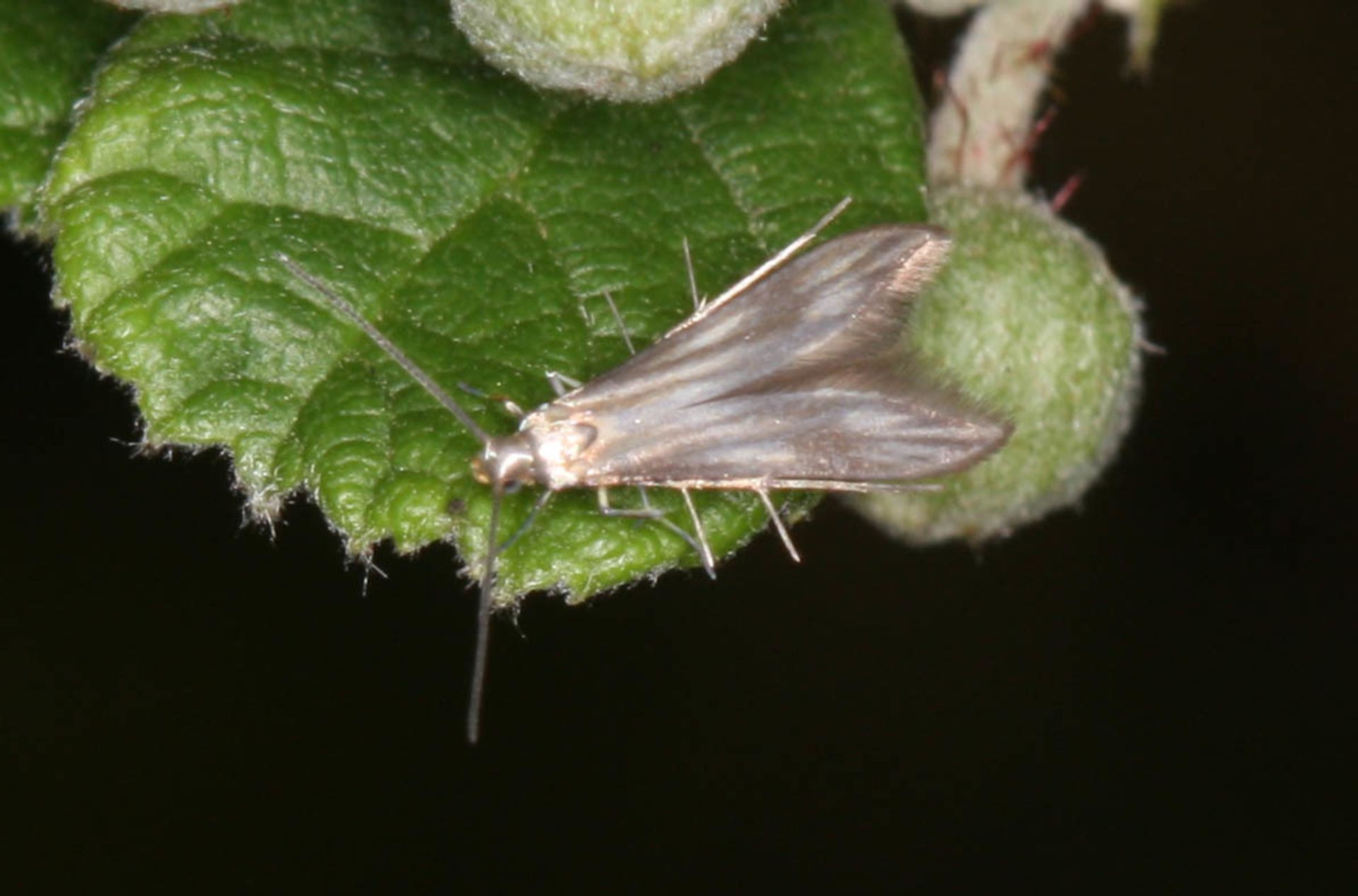
Schreckensteinia festaliella, known as the blackberry skeletonizer, is a small in the Schreckensteiniidae. Native to the Palearctic, it has been introduced to North America where it is now widespread. The is notable for its distinctive resting posture with hindlegs raised over the , and its larvae feed on Rubus species including bramble and raspberry.
Pronunciation
How to pronounce Schreckensteinia festaliella: //ʃrɛkɛnˈstaɪniə fɛˌstaliˈɛla//
These audio files are automatically generated. While they are not always 100% accurate, they are a good starting point.
Identification
Distinguished from similar small gelechioid moths by combination of: metallic bronzy-ochreous coloration; distinctive forewing pattern with dark fuscous streaks forming partial fascia; and the characteristic resting posture with hindlegs raised over . Larvae are pale green with darker line, matching leaf color.
Images
Appearance
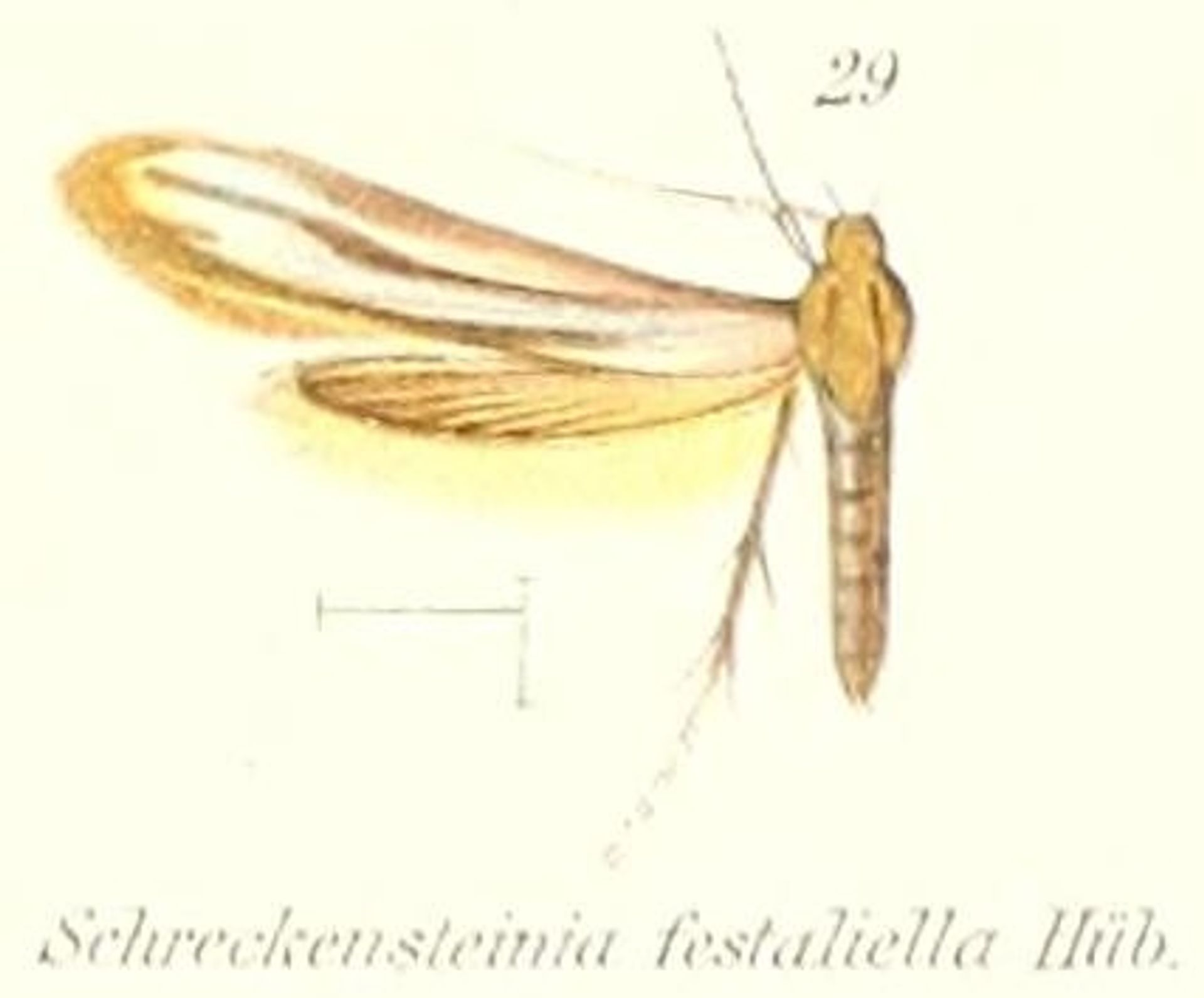
have a wingspan of 10–12 mm. is pale metallic bronzy-ochreous. Forewings are pale shining ochreous with fuscous suffusion at base and ; a dark fuscous streak runs from base along fold to tornus, then along termen nearly to apex; a dark fuscous longitudinal streak from before 1/3 of disc to costa close before apex, enlarged into a spot at 2/5 that tends to form a fascia with dark costal and tornal suffusion. Hindwings are dark grey.
Habitat
Associated with bramble and raspberry thickets; larvae occur on upper leaf surfaces under slight webbing. active in open near plants.
Distribution
Native to Palearctic including Europe; introduced to North America with established from California and Alberta eastward to Quebec and northeastern United States.
Seasonality
on wing March to September; two or three per year.
Diet
Larvae feed on Rubus fruticosus (bramble) and Rubus idaeus (raspberry). Specific feeding habits not documented.
Host Associations
- Rubus fruticosus - larval bramble
- Rubus idaeus - larval raspberry
Life Cycle
laid singly on leaf margins, either side of leaf, or on petioles. Larvae hatch colourless, become green to match , feed on upper leaf surface under slight web. Pupa initially green, darkens through successive colour changes before becoming iridescent; formed in open network cocoon attached to stem, often low down.
Behavior
are . Distinctive resting posture: stands on forelegs and mid-legs only with hindlegs raised over . Occasionally attracted to light. Larvae occasionally move to fresh leaves.
Ecological Role
Herbivore on Rubus ; contributes to leaf damage in bramble and raspberry patches. Specific role otherwise not documented.
Human Relevance
Minor pest of cultivated raspberries; 'blackberry skeletonizer' refers to larval feeding damage. Not considered economically significant.
Similar Taxa
- Other SchreckensteiniidaeShare characteristics but differ in wing pattern and associations; S. festaliella distinguished by specific forewing markings and Rubus specialization.
- Other small gelechioid mothsDistinguished by metallic coloration, specific forewing pattern with partial fascia, and unique hindleg-raised resting posture.
More Details
Taxonomic note
Schreckensteiniidae was historically placed within Choreutidae or as incertae sedis; current classification recognizes it as distinct family within Schreckensteinioidea.
Introduction history
Established in North America through human-mediated introduction; now widespread across continent from west to east.