
Schreckensteiniidae
Fletcher, 1929
Bristle-legged Moths
Genus Guides
1is a small of microlepidopteran commonly known as , named for the stout spines on their hindlegs. The family was described by Thomas Bainbrigge Fletcher in 1929 and constitutes the sole family within the superfamily Schreckensteinioidea. Its phylogenetic position within the Apoditrysia remains uncertain. The family includes the blackberry skeletoniser (Schreckensteinia festaliella), a European introduced to Hawaii for , and species of Corsocasis in Southeast Asia.
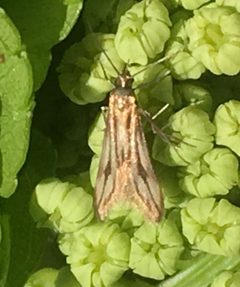
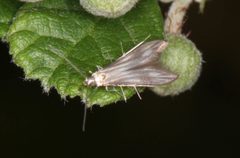
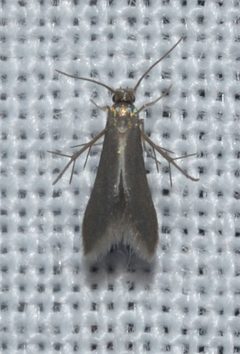
Pronunciation
How to pronounce Schreckensteiniidae: /ʃrɛkɛnstaɪˈnɪiˌaɪdiː/
These audio files are automatically generated. While they are not always 100% accurate, they are a good starting point.
Identification
The is distinguished from other Lepidoptera families by the presence of prominent bristle-like spines on the hindlegs. Beyond this trait, identification to and level requires examination of genitalia and wing venation patterns. Schreckensteinia festaliella can be recognized by its association with Rubus (bramble/blackberry) plants and its skeletonizing larval damage pattern.
Images
Appearance
are small with stout, bristle-like spines on the hindlegs—a diagnostic trait of the . Wing patterns and body vary among the few described . Specific details on coloration, wing venation, and body size are not well documented in available sources.
Habitat
associations are poorly documented. Schreckensteinia festaliella occurs in areas supporting Rubus , including hedgerows, woodland edges, and disturbed ground. Corsocasis species are found in Southeast Asian forests. Specific microhabitat preferences for most species remain unknown.
Distribution
The has a disjunct distribution. Schreckensteinia festaliella is widespread across Europe and has been introduced to Hawaii. of Corsocasis occur in Southeast Asia. Distribution records from GBIF indicate presence in Denmark, Norway, Sweden, and Vermont, USA.
Seasonality
activity periods are not comprehensively documented. Schreckensteinia festaliella has been observed in during summer months in Europe, with larval feeding occurring when Rubus foliage is available.
Host Associations
- Rubus - plantSchreckensteinia festaliella larvae skeletonize leaves of bramble and blackberry
Ecological Role
Schreckensteinia festaliella acts as a herbivore on Rubus . Its introduction to Hawaii was intended as to manage blackberry. The ecological roles of other members are not documented.
Human Relevance
Schreckensteinia festaliella has been deliberately introduced to Hawaii as a agent against Rubus . The is otherwise of minimal direct economic or cultural significance.
Similar Taxa
- Other Apoditrysia familiesPhylogenetic relationships within Apoditrysia are uncertain; is distinguished by the unique hindleg spines not found in related
More Details
Taxonomic uncertainty
The 's placement within Lepidoptera remains unresolved. It has been associated with various superfamilies, and its current position as the sole family in Schreckensteinioidea reflects ongoing systematic debate rather than stable classification.
Species diversity
The contains very few described . The Schreckensteinia includes S. festaliella, while Corsocasis contains three Southeast Asian species. The total diversity of the family is likely underestimated due to its small size and limited study.