
Hypsopygia costalis
Fabricius, 1775
Gold Triangle, Clover Hayworm Moth, Clover Hay Moth
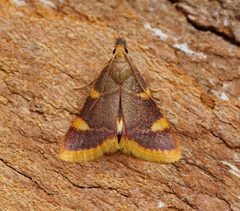
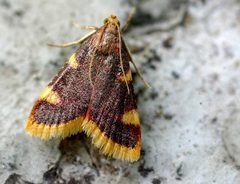
A small pyralid native to Europe, now established in eastern North America. display a distinctive golden triangular marking on the forewings. The is notable as a pest of stored hay and dried vegetation, with larvae feeding on clover and alfalfa hay. Adults are , active from July through November in the British Isles, with earlier (May–July) reported elsewhere. The has been sequenced, revealing 818 Mb across 31 chromosomal pseudomolecules.

Pronunciation
How to pronounce Hypsopygia costalis: /hɪpˈsɒpɪdʒiə kɒˈsteɪlɪs/
These audio files are automatically generated. While they are not always 100% accurate, they are a good starting point.
Identification
Distinguished from similar Pyralidae by the golden triangular forewing marking. The supposed H. aurotaenialis is now considered pending further study. may be separated from other small pyralids by wing pattern and association with dried hay or thatch .
Images
Habitat
Dried vegetation including haystacks, thatch, hedgerows, and barn walls during hay . Also recorded from squirrel dreys. Strongly associated with agricultural and rural environments where hay is stored or used.
Distribution
British Isles (most common in England and Wales, scarcer north to Scottish Borders, absent from Ireland except possible accidental imports); Europe; eastern North America (introduced).
Seasonality
period July to November in British Isles; May to July in other parts of range. Larval stage precedes adult .
Diet
Larvae feed on dried vegetation, notably hay made from clover or alfalfa, thatch, and vegetable matter within squirrel dreys. do not feed.
Life Cycle
stage not described in sources. Larva feeds on dried vegetation. occurs within an oval cocoon constructed in the feeding locale. emerges and is active during summer to autumn months.
Behavior
. Rests by day concealed in thatch, hedgerows, or on barn walls during hay . Attracted to light. Recorded at sugar .
Ecological Role
Serious pest of hay made from clover or alfalfa. Contributes to degradation of stored agricultural products and thatched roofing materials.
Human Relevance
Economic pest of stored hay, particularly clover and alfalfa. reported in barns and haystacks. May damage thatched roofs. sequenced as part of biodiversity initiatives.
Similar Taxa
- Hypsopygia aurotaenialisPreviously treated as separate , now considered with H. costalis pending further study. Shares golden forewing marking.
- Other PyralidaeDistinguished by specific golden triangular forewing pattern and association with dried hay .
Sources and further reading
- BugGuide
- GBIF taxonomy match
- iNaturalist taxon
- NCBI Taxonomy
- Catalogue of Life
- Comparison
- Greenstriped Grasshopper
- Dusky Grasshopper
- Species Records and Accounts
- List of Species Fact Sheets| Grasshoppers of Wyoming and the West
- Bembicid Holdings | Entomology Research Museum
- The genome sequence of the Gold Triangle, Hypsopygia costalis (Fabricius, 1775).