
Tampa
Ragonot, 1887
Species Guides
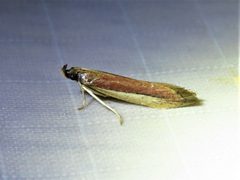
1- Tampa dimediatella(Tampa Moth)
Tampa is a of in the Pyralidae, Phycitinae, established by Ragonot in 1887. These small to medium-sized moths are part of the diverse snout moth , characterized by their relatively slender bodies and often subdued coloration typical of many Phycitinae. The genus name is derived from the city of Tampa, Florida, reflecting the type locality or region associated with its original description. in this genus are found in North America, with typically active during warmer months. Larval and specific associations remain poorly documented for most species.
Pronunciation
How to pronounce Tampa: /ˈtæmpə/
These audio files are automatically generated. While they are not always 100% accurate, they are a good starting point.
Identification
Tampa can be distinguished from related Phycitinae by genitalia , particularly the structure of the male valvae and female ostium. Externally, they generally exhibit narrow, forewings with relatively uniform scaling and reduced pattern elements compared to more boldly marked pyralid genera. The labial palps are typically porrect or slightly upturned, forming a moderate 'snout.' Accurate identification to species level usually requires dissection and comparison with or authoritative revisions.
Images
Distribution
North America, with records primarily from the southeastern United States including Florida, the type region. The appears to have its center of distribution in the Gulf Coastal and Atlantic Coastal plains.
Similar Taxa
- SalebriaBoth are Phycitinae with superficially similar wing shape and size, but Salebria typically exhibits more distinct transverse forewing lines and differences in male genitalia structure.
- EuzopheraShares and general body plan, but Euzophera often have more contrasting wing patterns and different antennal structure in males.
Sources and further reading
- BugGuide
- Wikipedia
- GBIF taxonomy match
- iNaturalist taxon
- NCBI Taxonomy
- Catalogue of Life
- Congrats to NAI Fellow UC Davis Distinguished Professor Walter Leal | Bug Squad
- Parasite Evolution: Why One Entomologist Studies Mites That Hitchhike on Flies
- How an Evolutionary Biologist Found Her Place in Entomology
- A Coast-to-Coast Tour Lands One Entomologist on the Home Team
- Bug Eric: May 2022
- Early Detection, Collaboration Key to Invasive Fruit Fly Eradication in Florida