
Plodia
Guenée, 1845
Indian meal moth (P. interpunctella), pantry moth, flour moth, grain moth, weevil moth
Species Guides
1- Plodia interpunctella(Indian meal moth)
Plodia is a of snout moths in the Pyralidae, Phycitinae, erected by Achille Guenée in 1845. The genus contains three , with P. interpunctella () being the most economically significant as a pest of stored food products. are small with distinctive wing banding, while larvae infest grains, dried fruits, nuts, and other stored goods. The genus is notable for its association with human food storage environments worldwide.
Pronunciation
How to pronounce Plodia: //ˈploʊdiə//
These audio files are automatically generated. While they are not always 100% accurate, they are a good starting point.
Images
Habitat
Primarily associated with stored food products in human dwellings, warehouses, and food processing facilities. Also occurs outdoors in caches of nuts and seeds stored by squirrels and rodents. may enter indoor environments through open doors and windows during warm weather.
Distribution
distribution due to association with stored food products and human commerce. Records from North America, Europe (Denmark, Norway, Sweden), and Asia (Japan). Present in Vermont, USA and distributed throughout the United States.
Diet
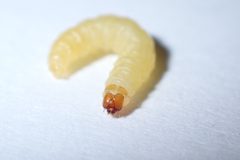
Larvae feed on stored food products including grains, cereals, dried fruits, nuts, seeds, flour, spices, and pet foods. Specifically observed consuming sunflower seeds, cashews, and organic nuts. do not feed; they seek mates and -rich food sources for -laying sites.
Life Cycle
Complete with , larval, pupal, and stages. Females lay eggs on food packaging surfaces; larvae hatch and enter packages through small gaps to feed. Larvae spin silken galleries and produce . Upon completing development, larvae become nomadic, leaving food sources to seek protected sites in cracks, crevices, behind baseboards, or in electrical sockets. Pupation occurs in spun cocoons. Adults emerge from pupae to seek new food sources. Laboratory colonies maintained at 28°C, 70% RH, 14:10 light:dark .
Behavior
exhibit fluttering in pantries and cupboards, actively seeking mates and food sources rich in , fats, and proteins. Females perform calling during specific scotophase periods, releasing (Z,E-9,12-tetradecadienyl acetate) to attract males. Larvae excavate seeds and generate entangled in silk strands. Larvae can chew through plastic packaging. Nomadic larval behavior occurs pre-, with larvae wandering walls and ceilings to find pupation sites.
Ecological Role
Stored product pest . Subject to by including Mesostenus spp. (Ichneumonidae), which parasitize caterpillars. Recently discovered ability of larvae to degrade polyethylene suggests potential value in biological plastic waste utilization.
Human Relevance
Major economic pest of stored food products in households and commercial food storage. signaled by presence of silk webbing and in food containers. Larval toxins may cause allergic reactions in humans. Controlled through , traps for monitoring male , freezing treatments (one week freeze, one week thaw, one week freeze), and storage in sealed containers.
Similar Taxa
- Cadra cautellaCommonly confused due to similar food sources and appearance; both are stored product pests in Pyralidae
- Cadra figulilellaCommonly confused due to similar food sources and appearance; known as raisin moth
- Ephestia kuehniellaCommonly confused; known as Mediterranean flour moth, another stored grain pest
More Details
Species composition
The comprises three : (Hübner, 1810–1813), P. dolorosa Dyar, 1919, and P. gloriosa Neunzig & Dow, 1993. P. interpunctella is the most widespread and economically important.
Pheromone biology
Female production is regulated by PBAN ( biosynthesis activating neuropeptide). Calling can be inhibited by octopamine agonists, with potential applications for pest management.
Plastic degradation
Larvae of P. interpunctella have been documented processing polyethylene, suggesting potential biotechnological applications for plastic waste management.
Parasitoid relationships
Mesostenus gracilis and related ichneumonid wasps are known , attacking caterpillars in stored products and sunflower stems.
Sources and further reading
- BugGuide
- Wikipedia
- GBIF taxonomy match
- iNaturalist taxon
- NCBI Taxonomy
- Catalogue of Life
- Pantry raiders: Indian meal moth, Plodia interpunctella — Bug of the Week
- Pantry surprises - Indian meal moth, Plodia interpunctella — Bug of the Week
- Small, whitish moths in the pantry? Could be Indian meal moth, Plodia interpunctella — Bug of the Week
- Pantry raid - Indian meal moth, Plodia interpunctella — Bug of the Week
- Bug Eric: Wasp Wednesday: Mesostenus
- Bug Eric: Beat The Winter Blues With An Indoor Bug Hunt
- Inhibitors of calling behavior of Plodia interpunctella
- Indianmeal Moth, Plodia interpunctella (Hübner) (Insecta: Lepidoptera: Pyralidae)
- Inhibitors of calling behavior of Plodia interpunctella
- Feeding Behavior of Larvae of Plodia interpunctella1 , 2
- Indian meal moth (Plodia Interpunctella Hübner, 1813) and human ecology
- Comportamento de oviposição de Plodia interpunctella / (Lepidoptera: Pyralidae) com difentes escolhas Oviposition behaviour of the Plodia interpunctella (Lepidoptera: Pyralidae) with different choices
- Electrophysiological and Behavioral Responses of Plodia interpunctella (Hubner) Females to Aldehyde Volatiles from Dried Fruits
- Biology and Host Range of Plodia interpunctella Hubner (Pyralididae: Lepidoptera)
- Behavioral Effect of a Sex Pheromone Extracted from Forewings of Male Plodia interpunctella 12
- Studies on the Ecological Life History of the Indian-Meal Moth, Plodia interpunctella HÜBNER