
Homoeosoma deceptorium
Heinrich, 1956
Black-banded Homoeosoma Moth
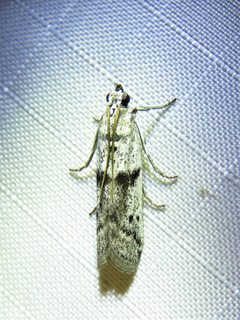
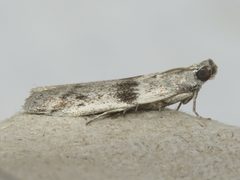
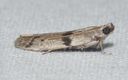
Homoeosoma deceptorium is a of snout moth in the Pyralidae, described by Carl Heinrich in 1956. It is found in eastern North America, with records from Florida to Ontario. The species is part of a that includes several sunflower-associated , though specific ecological details for this species remain limited. Its references the black-banded pattern on the wings.
Pronunciation
How to pronounce Homoeosoma deceptorium: /ˌhɒmiəʊˈsəʊmə dɪˌsɛptˈɔːriəm/
These audio files are automatically generated. While they are not always 100% accurate, they are a good starting point.
Identification
Distinguished from other Homoeosoma by the black-banded forewing pattern. Separated from the closely related and economically significant sunflower moth (Homoeosoma electellum) by wing pattern details and geographic range overlap. Identification to species level requires examination of genitalia or reference to original description. The species name 'deceptorium' refers to its deceptive similarity to other banded pyralid moths.
Images
Appearance
are small with forewings marked by dark transverse bands. The specific wing pattern includes blackish banding that gives the its . As with other Homoeosoma species, adults are relatively slender with a wingspan typical of small pyralid moths. Larval has not been separately described for this species.
Habitat
Associated with supporting native sunflowers (Helianthus spp.) and related Asteraceae. Found in open fields, prairies, and disturbed areas where plants occur. Specific microhabitat preferences are not documented, but related are attracted to blooming sunflower .
Distribution
Eastern North America: Florida, Georgia, Illinois, Indiana, Maryland, North Carolina, Ohio, Oklahoma, Ontario (Canada), Vermont, and West Virginia. Records suggest a primary range in the eastern and central United States extending into southern Ontario.
Seasonality
activity period not precisely documented. Based on related and collection records, likely active during summer months when sunflower are in bloom. Specific period varies across the latitudinal range.
Ecological Role
As a member of a with multiple sunflower- herbivores, likely functions as a primary consumer on Asteraceae flower . May serve as for in the Ichneumonidae, as documented for congeneric H. electellum. Specific ecological interactions remain unstudied.
Human Relevance
No documented economic impact. Unlike the sunflower moth (H. electellum), this has not been reported as a pest of commercial sunflower crops. The Homoeosoma contains both agricultural pests and non-pest species; this species appears to fall in the latter category based on available records.
Similar Taxa
- Homoeosoma electellumThe sunflower moth is a major agricultural pest with similar size and general appearance, but differs in wing pattern (silver-gray to buff without bold black banding) and has well-documented larval of seed-feeding in sunflower
- Other Homoeosoma speciesSeveral occur in North America with overlapping ranges; precise identification requires examination of genitalia and reference to Heinrich's original description and subsequent revisionary work
More Details
Taxonomic history
Described by Carl Heinrich in 1956 as part of his extensive work on North American Phycitinae. The specific epithet 'deceptorium' reflects the ' resemblance to other banded . Heinrich's original description was based on specimens from the eastern United States.
Research gaps
No published studies specifically address the , associations, or stages of H. deceptorium. Most information is inferred from -level characteristics or congeneric . The 650 iNaturalist observations suggest it is regularly encountered but remains biologically understudied.