
Dioryctria clarioralis
(Walker, 1863)
Blister Coneworm Moth
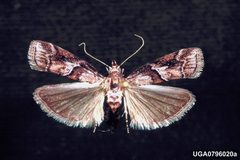
Dioryctria clarioralis, commonly known as the blister coneworm , is a of pyralid moth found in the eastern United States. The larvae feed on various Pinus species, particularly attacking flower clusters and shoots. The species is part of a whose members are generally known as coneworm moths due to larval feeding habits in conifer cones and shoots.
Pronunciation
How to pronounce Dioryctria clarioralis: /dijoˈɾɪktɹiə ˌklæɹioˈɹælɪs/
These audio files are automatically generated. While they are not always 100% accurate, they are a good starting point.
Identification
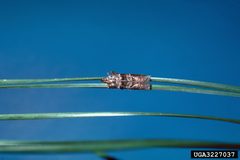
Members of the Dioryctria are small ( typically 10–15 mm) that can be challenging to distinguish from one another without close examination. D. clarioralis is recognized from other eastern North American Dioryctria by specific genitalic and wing pattern characters. Adults may be attracted to light. Larvae are concealed feeders within pine tissues, making field identification of stages difficult without tissue examination.
Images
Habitat
Associated with pine-dominated , particularly where Pinus palustris and other Pinus occur.
Distribution
Eastern United States, including Florida, New Jersey, and Virginia.
Diet
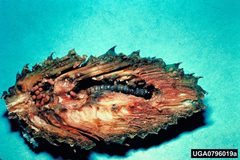
Larvae feed on various Pinus , including Pinus palustris. They attack flower clusters and shoots of plants.
Host Associations
- Pinus palustris - larval food plant
- Pinus - larval food plantvarious
Behavior
Larvae are concealed feeders, tunneling within pine flower clusters and shoots. This concealed feeding habit protects larvae from and environmental extremes.
Ecological Role
As a primary consumer of pine tissues, larvae contribute to nutrient cycling in pine . The serves as for in related Dioryctria species, suggesting similar parasitoid relationships may occur.
Human Relevance
Larvae can be pests of pine trees, damaging reproductive structures (cones) and shoots. Related Dioryctria are significant forestry pests, though specific economic impact of D. clarioralis is less documented.
Similar Taxa
- Dioryctria auranticellaAlso a coneworm feeding on conifers; D. auranticella occurs in western North America (Ponderosa Pine Coneworm), while D. clarioralis is eastern in distribution
- Other Dioryctria speciesMany congeneric share similar larval habits and ; accurate identification requires examination of genitalia or molecular markers
Sources and further reading
- BugGuide
- Wikipedia
- GBIF taxonomy match
- iNaturalist taxon
- NCBI Taxonomy
- Catalogue of Life
- Baryscapus dioryctriae Archives - Entomology Today
- Baryscapus dioryctriae - Entomology Today
- Bug Eric: New Mexico Night Bugs
- Bug Eric: My Personal National Moth Week, 2017
- Bug Eric: September 2017
- New Wasp Species Discovered Parasitizing Pests of Pine Trees