
Acrobasis caryivorella
Ragonot, 1887
pecan nursery casemaker
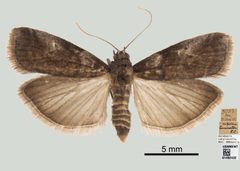
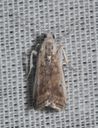
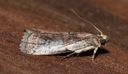
Acrobasis caryivorella, known as the pecan nursery casemaker, is a snout moth in the Pyralidae described by Ragonot in 1887. It is a pest of pecan and walnut trees, with larvae that bore into new growth and developing nuts. The has two to four per year and overwinters in the larval stage. It occurs in southeastern Ontario, Canada, and the eastern United States.
Pronunciation
How to pronounce Acrobasis caryivorella: //ˌækroʊˈbeɪsɪs ˌkɛrɪˌvɔːˈrɛlə//
These audio files are automatically generated. While they are not always 100% accurate, they are a good starting point.
Identification
The can be distinguished from the related pecan nut casebearer (Acrobasis nuxvorella) by its association with nursery stock and new growth rather than mature nut clusters. Larvae construct silk cases for . Accurate identification to species level typically requires examination of genitalia or molecular methods.
Images
Habitat
Pecan orchards, walnut groves, and areas with trees in the Carya and Juglans. Larvae are associated with new growth and developing plant tissues.
Distribution
Southeastern Ontario, Canada, and the eastern United States.
Seasonality
Two to four per year, with activity in spring and summer. First-generation larvae feed on new growth; subsequent generations develop through summer. occurs in the larval stage.
Diet
Larvae feed on Carya and Juglans . First- larvae bore into new growth of plants; later generations hollow out the interior of nuts.
Host Associations
- Carya illinoinensis - primary pecan
- Carya - hickories
- Juglans - walnuts
Life Cycle
Two to four annually. are laid on plants. First-generation larvae bore into new growth. The overwinters as larvae in sealed cases attached to twigs. Following spring , larvae feed on buds and flowers. Second and subsequent generation larvae feed on maturing nuts and pupate within hollowed nut shells.
Behavior
Larvae construct protective silk cases for . Larvae of the first bore into new growth; later generations tunnel into and hollow out developing nuts, pupating inside.
Ecological Role
Pest causing damage to pecan and walnut nursery stock and nut production. Larval boring into new growth and nuts reduces yield and plant vigor.
Human Relevance
Economic pest of pecan and walnut . Damage to new growth and developing nuts reduces crop yields. Management may require monitoring and targeted intervention in nursery and orchard settings.
Similar Taxa
- Acrobasis nuxvorellaAlso a pecan pest, but primarily attacks mature nut clusters rather than nursery stock and new growth; has a ridge of dark across forewings
- Acrobasis juglandisAnother congeneric feeding on Juglans; specific preferences and morphological distinctions require expert examination
More Details
Taxonomic Note
Acrobasis caryivorella is sometimes confused with Acrobasis nuxvorella (pecan nut casebearer) in older literature. The two have distinct tissue preferences and seasonal patterns.
Historical Research
A 1925 study in the Journal of Economic Entomology detailed the in Texas, documenting two annually with winter hibernation as larvae in sealed cases.
Sources and further reading
- BugGuide
- Wikipedia
- GBIF taxonomy match
- iNaturalist taxon
- Catalogue of Life
- Acrobasis nuxvorell Archives - Entomology Today
- Pecan Nut Casebearer: New Guide Provides IPM Options
- Bug Eric: Wasp Wednesday: Mesostenus
- Bug Eric: A Potential New Host Record for Calliephialtes grapholithae (Hymenoptera: Ichneumonidae) from a Paper Wasp nest (Hymenoptera: Vespidae: Polistes metricus)
- Life History of Pecan Nut Case-Bearer Acrobasis Caryivorella Zell.