
Cacotherapia bilinealis
Barnes & McDunnough, 1918
Cacotherapia bilinealis is a of snout moth in the Pyralidae, described from Arizona in 1918. It belongs to the Galleriinae, which includes many species associated with stored products and plant materials. The species remains poorly known, with only five observations recorded on iNaturalist. Its specific epithet "bilinealis" refers to two lines, likely describing a wing pattern feature.
Pronunciation
How to pronounce Cacotherapia bilinealis: /kækoʊˈθɛrɑːpiə ˌbaɪlɪˈniːəlɪs/
These audio files are automatically generated. While they are not always 100% accurate, they are a good starting point.
Identification
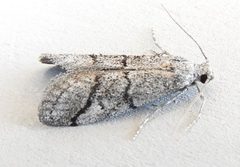
Can be distinguished from other Cacotherapia by the two longitudinal lines on the forewings (implied by the specific epithet "bilinealis"). As with many Galleriinae, likely have relatively broad wings and a characteristic snout formed by elongated labial palps. Definitive identification requires comparison with or original description.
Images
Distribution
Known only from the US state of Arizona. Based on iNaturalist data, the has extremely limited documented occurrence.
Similar Taxa
- Other Cacotherapia speciesMembers of this share similar body plans and wing shapes; C. bilinealis is distinguished by its specific wing pattern markings
- Other Galleriinae in Arizona members may overlap in size and general appearance; genitalia examination or wing pattern details required for separation
More Details
Taxonomic history
Described by William Barnes and James Halliday McDunnough in 1918, two prominent North American lepidopterists of the early 20th century. The Cacotherapia was established by George Hampson.
Data scarcity
With only five iNaturalist observations and no additional published biological studies readily available, most aspects of this ' remain undocumented. This pattern is common for many described but poorly collected North American microlepidoptera.