
Pococera expandens
Walker, 1863
Striped Oak Webworm Moth, Double-humped Pococera Moth
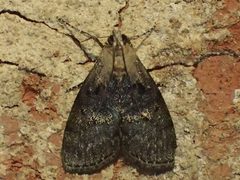
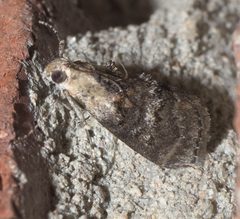
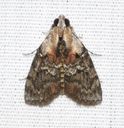
Pococera expandens is a small in the Pyralidae, Epipaschiinae. It is commonly known as the striped oak webworm moth or double-humped pococera moth. The has a wingspan of approximately 22 mm. are active from April through September across much of North America.
Pronunciation
How to pronounce Pococera expandens: //ˌpoʊkoʊˈsɛrə ɛksˈpændɛnz//
These audio files are automatically generated. While they are not always 100% accurate, they are a good starting point.
Identification
Distinguished from other Pococera by the double-humped wing profile. The species name 'expandens' refers to the expanded or projecting wing shape. Separation from related webworm requires examination of wing pattern and genitalia. The similar Pococera asperatella (Maple Webworm Moth) can be distinguished by association and subtle wing pattern differences.
Images
Appearance
Small with wingspan of 22 mm. The 'double-humped pococera moth' refers to distinctive raised projections on the forewings. The 'striped oak webworm moth' name indicates patterning on the wings, though specific coloration details are not well documented in available sources.
Habitat
Associated with oak forests and woodlands. Larval involves webbed leaf clusters on oak trees. habitat includes forested areas and edges where oaks occur.
Distribution
Widespread across North America. Recorded from Arizona, Arkansas, British Columbia, Georgia, Illinois, Indiana, Iowa, Kentucky, Louisiana, Maine, Manitoba, Maryland, Massachusetts, Mississippi, New Brunswick, New Hampshire, New Jersey, New York, North Carolina, Ohio, Oklahoma, Ontario, Pennsylvania, Quebec, South Carolina, Tennessee, Texas, Virginia, West Virginia, and Wisconsin.
Seasonality
recorded on wing from April to September. The broad period suggests multiple or extended across its range.
Diet
Larvae feed on oak leaves (Quercus spp.), constructing silken webs to tie leaves together. Specific oak preferences have not been documented.
Host Associations
- Quercus - larval food plantoak
Life Cycle
Complete with , larva, pupa, and stages. Larvae are web-forming caterpillars that feed on oak foliage within silken shelters. occurs within the web or in leaf litter. Specific details on egg laying, larval instars, and stage are not documented in available sources.
Behavior
Larvae construct communal webs on oak branches, tying multiple leaves together with silk. This web-building provides protection from and desiccation. are and attracted to light.
Ecological Role
Larval stage functions as a primary consumer of oak foliage. The serves as prey for various including and predatory insects. One documented predator is the assassin bug Acholla multispinosa, which has been observed feeding on Pococera robustella (Pine Webworm), a with similar .
Human Relevance
Minor forest pest. Larval webbing and feeding can cause aesthetic damage to ornamental oaks and minor defoliation in forest settings. Not considered economically significant. The is a subject of natural history observation and contributes to biodiversity documentation.
Similar Taxa
- Pococera asperatellaSimilar size, web-forming larval , and wing pattern. Distinguished by association with maple (Acer) rather than oak, and subtle differences in forewing pattern.
- Pococera robustellaPine-feeding with similar web-forming . Distinguished by association with Pinus and geographic distribution in pine-dominated regions.
More Details
Taxonomic Notes
The was originally described as Benta expandens by Walker in 1863 before transfer to Pococera. The placement in Epipaschiinae reflects modern phylogenetic understanding of Pyralidae.