
Agathodes monstralis
Guenée, 1854
Sky-pointing Moth
Agathodes monstralis is a of in the Crambidae, commonly known as the Sky-pointing Moth. The species was described by Guenée in 1854 and is placed in the Spilomelinae. It is one of several species in the Agathodes, which are distributed primarily in tropical and subtropical regions. The refers to a characteristic resting posture where the moth holds its wings and body oriented upward.
Pronunciation
How to pronounce Agathodes monstralis: /əˈɡæθoʊdiːz mɒnˈstrɑːlɪs/
These audio files are automatically generated. While they are not always 100% accurate, they are a good starting point.
Identification
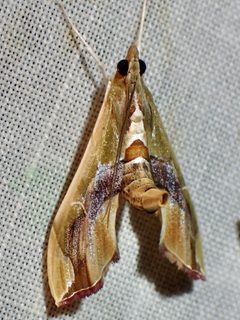
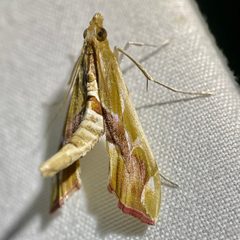
The sky-pointing resting posture—wings held vertically above the body with the pointing upward—is diagnostic for this and the basis for its . This posture distinguishes it from most other Crambidae, which typically hold wings flat or in a shallow tent-like position. Within the Agathodes, identification to species level requires examination of genitalia or detailed wing pattern analysis.
Images
Appearance
Medium-sized with wings held in a distinctive upright, tent-like posture when at rest. Forewings and hindwings are typically pale with variable patterning. The wing shape is relatively broad and rounded. Body is slender. are . Coloration generally includes pale yellowish, whitish, or light brown tones with darker markings.
Habitat
Tropical and subtropical forested ; associated with vegetation in warm, humid environments.
Distribution
Neotropical region; recorded from Central and South America including Mexico, Rica, Panama, Colombia, Ecuador, Peru, and Brazil.
Seasonality
have been recorded throughout the year in tropical portions of the range; activity peaks likely correspond to wet season conditions in seasonal .
Behavior
rest with wings and body oriented vertically upward in the characteristic "sky-pointing" posture. This posture is maintained during daylight hours when the is inactive. Adults are and attracted to light.
Ecological Role
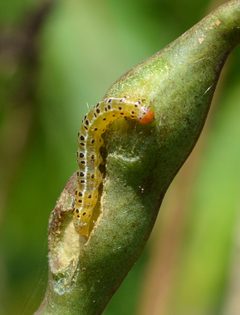
may serve as ; larval poorly known but likely herbivorous based on -level patterns.
Human Relevance
Occasionally attracted to artificial light sources; of minor interest to lepidopterists due to distinctive resting posture.
Similar Taxa
- Other Agathodes speciesSimilar wing shape and general appearance; require genitalia examination or detailed pattern analysis for definitive separation
- Other Crambidae in SpilomelinaeSimilar size and general ; distinguished by sky-pointing resting posture unique to Agathodes among regional fauna
More Details
Etymology
The specific epithet "monstralis" likely refers to the unusual or remarkable (monstrous in the sense of extraordinary) appearance or posture of the . The "Sky-pointing Moth" directly describes the diagnostic resting .