
Eudonia strigalis
Dyar, 1906
striped eudonia moth
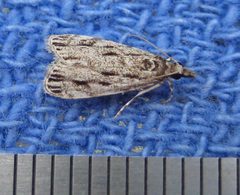
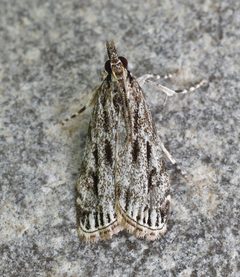
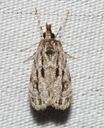
Eudonia strigalis, known as the striped eudonia , is a small crambid moth described by Harrison Gray Dyar Jr. in 1906. It occurs across eastern North America from Nova Scotia to Florida. The shows latitudinal variation in activity patterns, with year-round in the south and a restricted season in northern .
Pronunciation
How to pronounce Eudonia strigalis: //juːˈdoʊniə straɪˈɡeɪlɪs//
These audio files are automatically generated. While they are not always 100% accurate, they are a good starting point.
Identification
Small size (13–17 mm wingspan) and striped forewing pattern separate this from most other eastern North American crambids. Similar Eudonia species may require genitalia examination or molecular confirmation for definitive identification. The specific epithet 'strigalis' refers to the streaked or striped appearance.
Images
Distribution
Eastern North America: recorded from Nova Scotia and southern Ontario southward to Florida. Distribution records include Vermont and other eastern US states.
Seasonality
active year-round in southern portion of range. In northern areas, adults occur from May to September.
Similar Taxa
- Other Eudonia speciesShare small size and general ; may overlap in range and require detailed examination for separation
- Scoparia speciesFormerly classified in same (basionym Scoparia strigalis); similar size and preferences in eastern North America
More Details
Taxonomic history
Originally described as Scoparia strigalis Dyar, 1906; later transferred to Eudonia. The basionym reflects historical classification in Scopariinae .
iNaturalist observations
Over 4,200 observations documented on iNaturalist, indicating this is a frequently encountered and well-documented in its range.