
Eudonia rectilinea
Zeller, 1874
Eudonia rectilinea is a small crambid described by Zeller in 1874. It is native to western North America, with confirmed records from British Columbia to California and east to Montana. are active from spring through late summer. The is distinguished by its relatively straight forewing lines, as suggested by its specific epithet.
Pronunciation
How to pronounce Eudonia rectilinea: /juːˈdoʊniə rɛkˈtɪlɪniə/
These audio files are automatically generated. While they are not always 100% accurate, they are a good starting point.
Identification
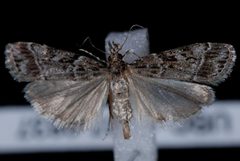
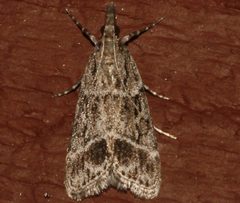
Small size (8–10 mm forewing length) distinguishes it from larger congeneric . The relatively straight forewing lines contrast with more curved or angled lines in related Eudonia species. Genitalia examination may be required for definitive identification from similar western North American Scopariinae.
Images
Appearance
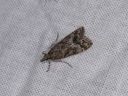
Forewing length 8–10 mm. Forewings with relatively straight transverse lines, giving the its name. Wing pattern typical of the Eudonia, with variable gray-brown ground color and contrasting pale and dark markings.
Distribution
Western North America: British Columbia, California, Montana, Nevada, Oregon, and Washington.
Seasonality
recorded on wing from April to September.
Similar Taxa
- Eudonia rectilineataSimilar name; described from China in 2012 taxonomic revision. Geographically distinct from North American E. rectilinea.
- Other western North American Eudonia speciesOverlap in range and general appearance; genitalia examination often required for definitive separation.