
Donacaula longirostrallus
Clemens, 1861
Long-beaked Donacaula Moth
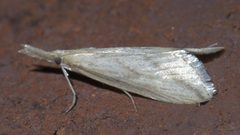
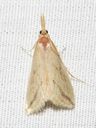
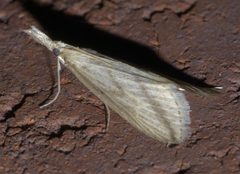
Donacaula longirostrallus is a in the Crambidae, described by James Brackenridge Clemens in 1860. It is known as the long-beaked donacaula moth. The is widely distributed across eastern and central North America, with records from Canada and numerous U.S. states. are active from May through September.
Pronunciation
How to pronounce Donacaula longirostrallus: //dɒnəˈkaʊlə lɒŋɡɪˈrɒstrələs//
These audio files are automatically generated. While they are not always 100% accurate, they are a good starting point.
Identification
The can be distinguished from other Donacaula by its forewing length of 22–28 mm and the combination of its North American distribution and period from May to September. The specific epithet 'longirostrallus' (long-beaked) suggests a distinguishing feature in the or labial palps, though this is not explicitly documented.
Images
Appearance
Forewing length 22–28 mm. Specific coloration and pattern details are not documented in available sources.
Distribution
Recorded from Nova Scotia, Ontario, and Quebec in Canada, and from Alabama, Arkansas, Connecticut, Florida, Louisiana, Maine, Massachusetts, Michigan, Mississippi, Nebraska, New Jersey, New York, North Carolina, Pennsylvania, Texas, Vermont, and Virginia in the United States.
Seasonality
have been recorded on wing from May to September.
More Details
Authorship date discrepancy
Sources vary between 1860 and 1861 for the original description date. GBIF and NCBI list 1861, while Wikipedia states 1860.
Subfamily placement
Catalogue of Life places this in Schoenobiinae within Crambidae.