
Pyrausta scurralis
Hulst, 1886
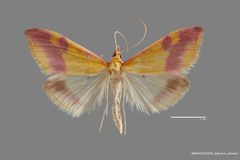
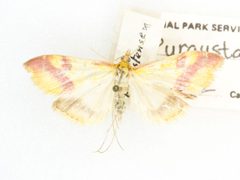
Pyrausta scurralis is a small crambid described by George Duryea Hulst in 1886. It occurs across western and central North America from the Canadian prairies to the southwestern United States and Mexico. The inhabits undisturbed shrubby aspen parkland. Its larvae possibly feed on plants in the Lamiaceae.
Pronunciation
How to pronounce Pyrausta scurralis: /pɪˈraʊstə skʌˈreɪlɪs/
These audio files are automatically generated. While they are not always 100% accurate, they are a good starting point.
Identification
can be recognized as Pyrausta by their small size and crambid characteristics including the prominent snout formed by elongated labial palps. The Pyrausta scurralis awemealis occurs in Manitoba and Saskatchewan. Positive identification to species level requires examination of genitalia or reference to original description.
Images
Appearance
Wingspan approximately 23 mm. As a member of the Crambidae, possess elongated labial palps forming a prominent snout-like projection from the front of the . Specific coloration and wing pattern details are not documented in available sources.
Habitat
Undisturbed shrubby aspen parkland. Specific microhabitat preferences for larvae or are not documented.
Distribution
North America: Canadian provinces of Ontario, Manitoba, Saskatchewan, and Alberta; United States: California, Arizona, New Mexico; Mexico. The P. s. awemealis is restricted to Manitoba and Saskatchewan.
Diet
Larvae possibly feed on a of Labiatae (Lamiaceae). Specific plant records are not confirmed.
Similar Taxa
- Pyrausta signatalisBoth are small crambid in the Pyrausta. P. signatalis is known as the raspberry pyrausta and is a documented pest of Monarda , while P. scurralis has been reported from different geographic regions and associations remain uncertain.
- Other Pyrausta speciesMany Pyrausta are small, similarly colored crambid requiring genitalia examination or molecular analysis for reliable identification.