Pyrausta orphisalis
Walker, 1859
orange mint moth, orange-spotted pyrausta
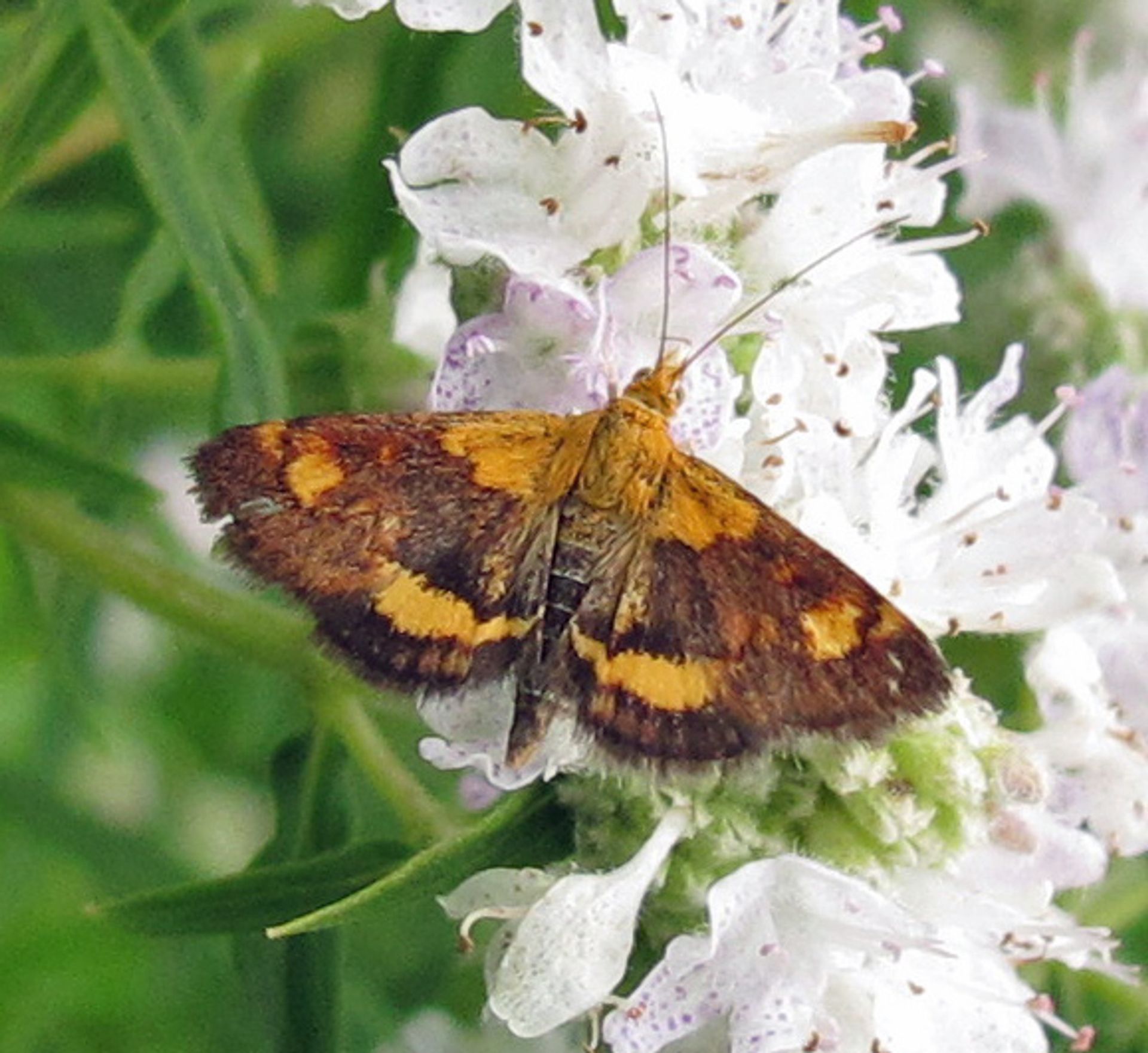
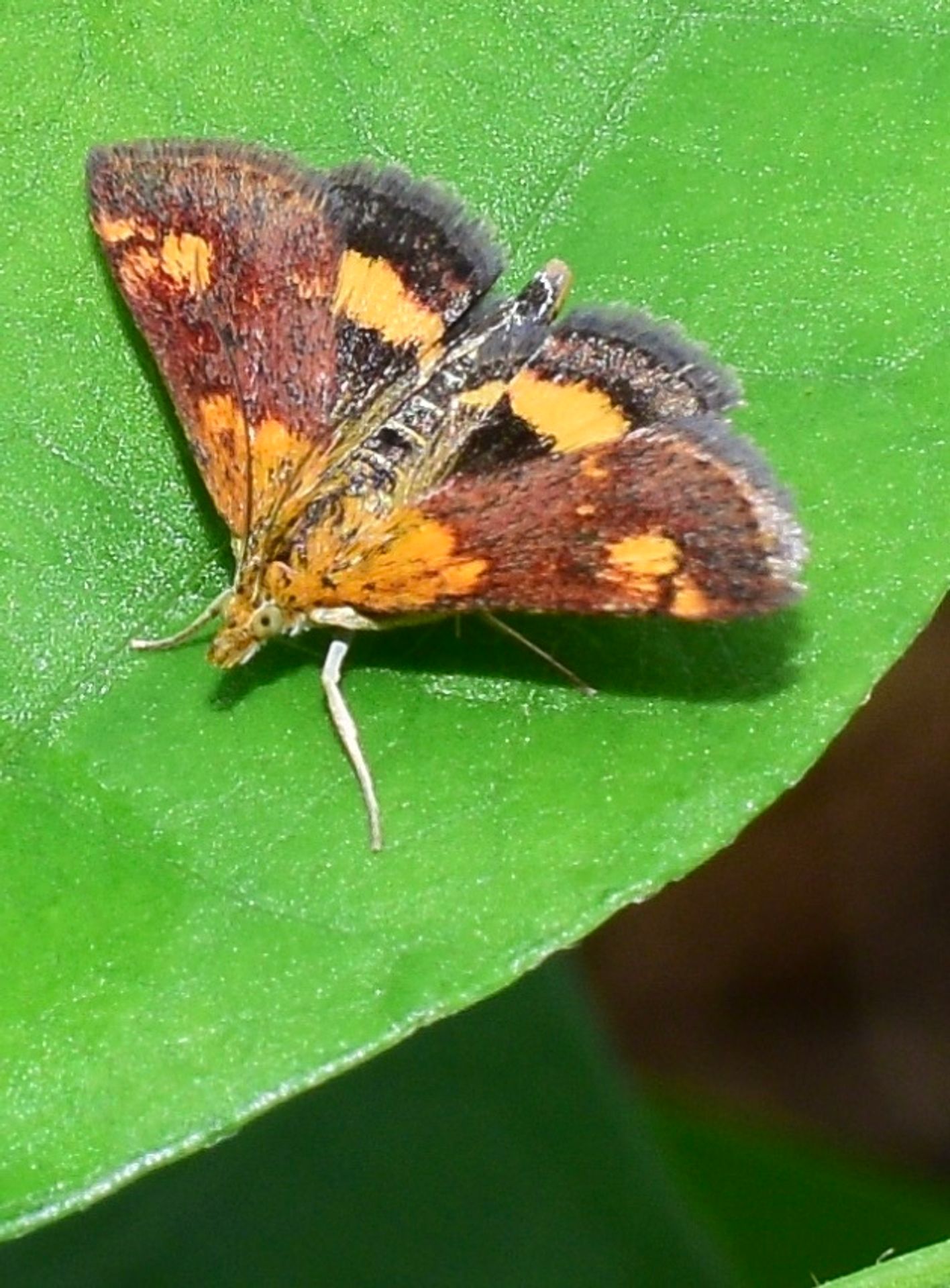
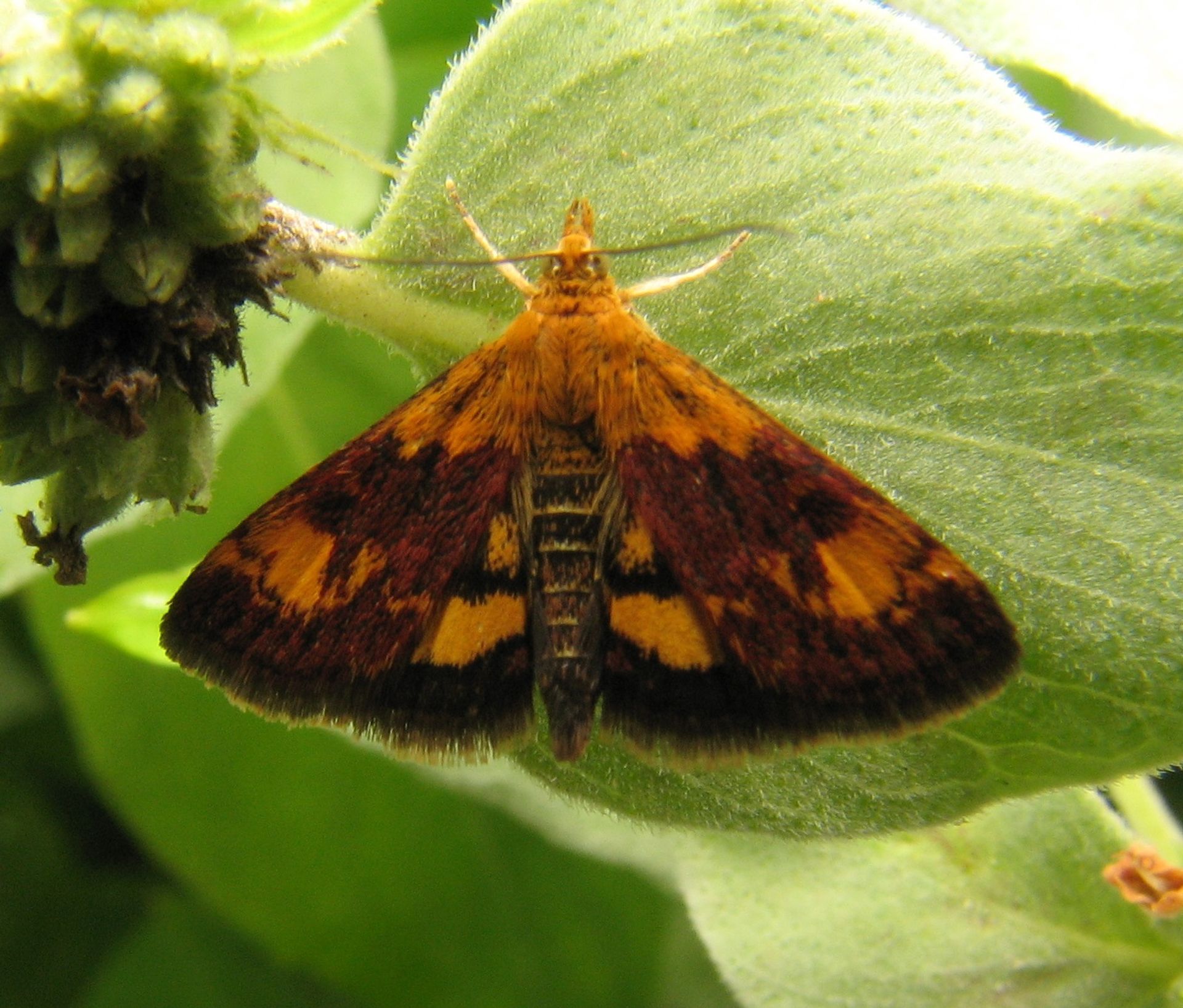
Pyrausta orphisalis is a small crambid native to North America, commonly known as the orange mint moth or orange-spotted pyrausta. have a wingspan of 15–17 mm and are active during summer months. The larvae are specialized herbivores that feed on various mint , particularly Monarda.
Pronunciation
How to pronounce Pyrausta orphisalis: /pɪˈraʊstə ɔrˈfɪsælɪs/
These audio files are automatically generated. While they are not always 100% accurate, they are a good starting point.
Images
Distribution
North America, ranging from Newfoundland west to British Columbia, south to Florida and New Mexico. Documented in Canadian provinces including Alberta, Manitoba, and Saskatchewan, as well as Vermont in the United States.
Seasonality
fly from mid-June to late July, with timing varying by location.
Diet
Larvae feed on various mint (Lamiaceae), including Monarda (beebalm/bergamot).
Host Associations
- Monarda - larval plantIncludes spotted beebalm, scarlet beebalm, and wild bergamot
- Lamiaceae - larval Various mint
Life Cycle
are laid in buds of leaves and flowers. Larvae hatch and feed within developing flower buds, producing (black pellets) as evidence of feeding. Multiple occur per season. details not documented.
Behavior
Larvae feed concealed within flower buds and leaf axils, causing shredded buds, holes in leaves, and accumulation of . are active fliers during daylight hours.
Ecological Role
Larvae act as herbivores on mint plants. Heavy can reduce or eliminate floral displays, potentially impacting and other nectar-dependent organisms that rely on Monarda.
Human Relevance
Considered a minor garden pest of ornamental Monarda . Larval feeding can destroy flower buds and reduce aesthetic value. Mechanical control by crushing caterpillars is effective for small plantings. Organic containing Bacillus thuringiensis kurstaki (Btk) or spinosad are options for larger plantings, with caution required to avoid harm to non-target .
Similar Taxa
- Pyrausta signatalisSimilar (raspberry pyrausta) and shared larval association with Monarda; distinguished by coloration patterns and geographic overlap in eastern North America
- Other Pyrausta speciesMany congeneric share similar size and general ; precise identification requires examination of wing pattern details and genitalia
More Details
Conservation note
While often managed as a pest in garden settings, the is native to North America and plays a role in natural . Control decisions should balance plant protection with potential impacts on native ecological relationships.
Taxonomic history
Described by Francis Walker in 1859, with the name remaining stable since original description.