
Pyrausta napaealis
Hulst, 1886
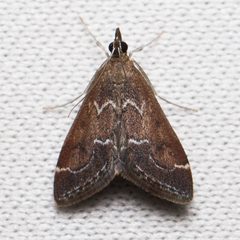
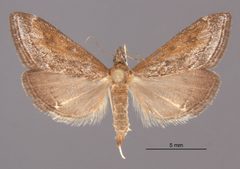
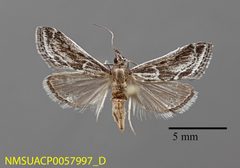
Pyrausta napaealis is a small crambid described by George Duryea Hulst in 1886. It is found in western North America from Washington to California and eastward to Texas, as well as in northern Mexico. have a wingspan of 17–22 mm and exhibit distinctive ash gray and brown forewing patterning. The is active primarily from March through August, with some records in October.
Pronunciation
How to pronounce Pyrausta napaealis: //ˌpɪˈraʊstə ˌnæpiˈeɪlɪs//
These audio files are automatically generated. While they are not always 100% accurate, they are a good starting point.
Identification
Distinguished by the combination of ash gray forewing margins contrasting with fuscous brown costal and central areas, and fuscous hindwings with a black marginal line. The small size (17–22 mm wingspan) and western North American range help separate it from similar Pyrausta .
Images
Appearance
Wingspan 17–22 mm. Forewings cinereous (ash gray) along inner and outer margins, fuscous brown along and central space. Hindwings fuscous with black marginal line.
Distribution
Western United States: Washington to California, west to Arizona, Nevada, New Mexico, and Texas. Also recorded from northern Mexico.
Seasonality
recorded on wing March through August and in October.