
Pyrausta morenalis
Dyar, 1908
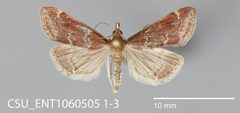
Pyrausta morenalis is a small crambid described by Harrison Gray Dyar Jr. in 1908. It occurs in western North America from Washington to California and westward to Texas and Nevada, with additional records in Mexico. The has a wingspan of 18–22 mm and exhibits distinctive dark reddish-brown forewings with a bronzy sheen contrasting with pale hindwings. are active primarily from spring through mid-summer, with some records extending into autumn and early winter.
Pronunciation
How to pronounce Pyrausta morenalis: /pɪˈraʊstə moʊrɪˈneɪlɪs/
These audio files are automatically generated. While they are not always 100% accurate, they are a good starting point.
Identification
Distinguished from similar Pyrausta by the combination of dark reddish-brown forewings with bronzy luster and contrasting pale hindwings. The small size (18–22 mm wingspan) and specific geographic range in western North America aid separation from eastern . Accurate identification typically requires examination of specimens; larval identification is challenging even for .
Images
Appearance
Small with wingspan 18–22 mm. Forewings dark reddish brown with a bronzy shine. Hindwings pale in coloration.
Distribution
Western North America: recorded from Washington south to California, west to Texas and Nevada. Also present in Mexico.
Seasonality
on wing March through July, with additional records in October and December. Multivoltine with overlapping likely.
Similar Taxa
- Pyrausta signatalisSimilar size and use; both are crambid associated with flowering plants. P. signatalis is specifically documented feeding on Monarda , while P. morenalis associations remain unconfirmed. differ in wing coloration and pattern.
More Details
Original Description
Originally described as Metasia morenalis by Dyar in 1908, later transferred to Pyrausta.