Pyrausta inornatalis
Fernald, 1885
Inornate Pyrausta Moth
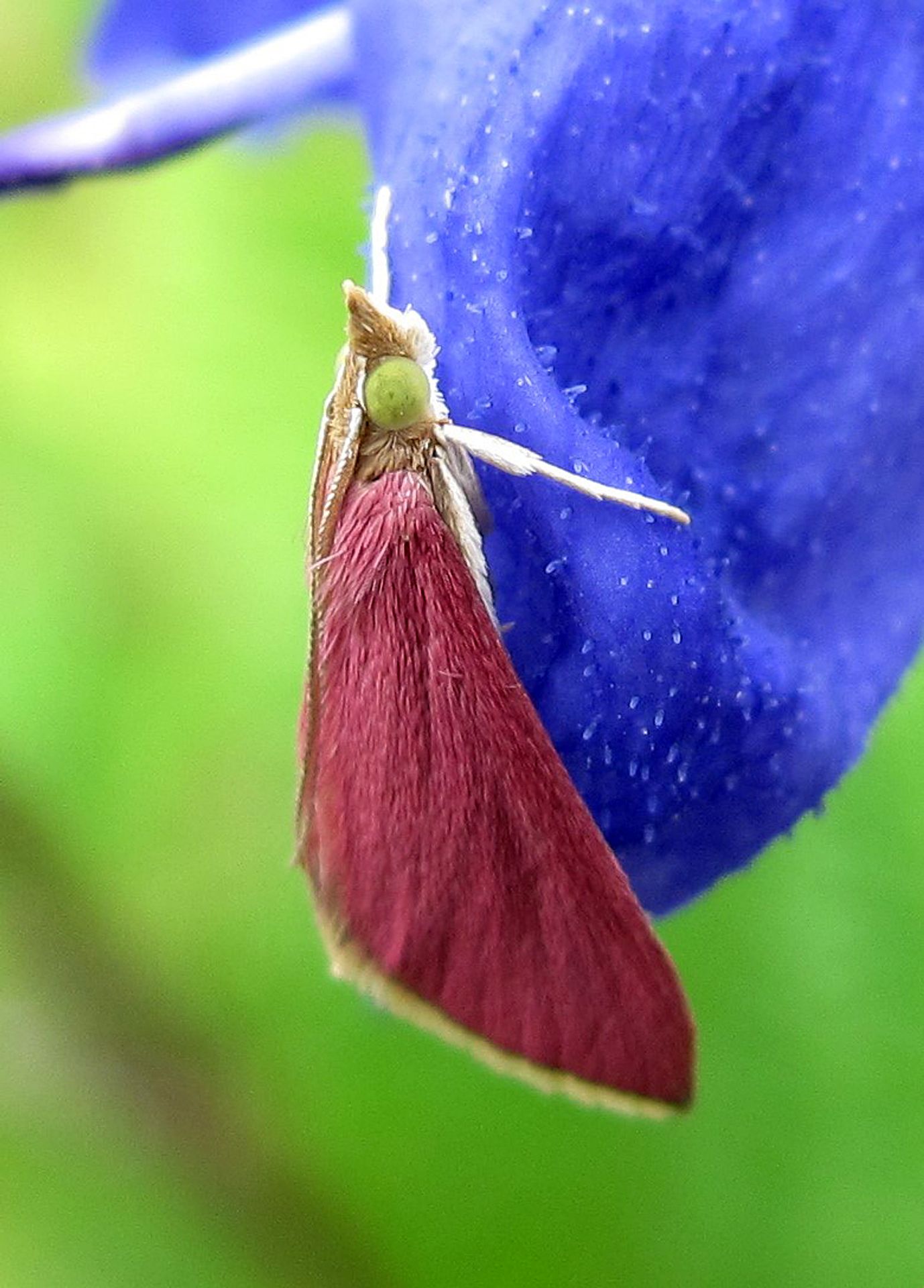
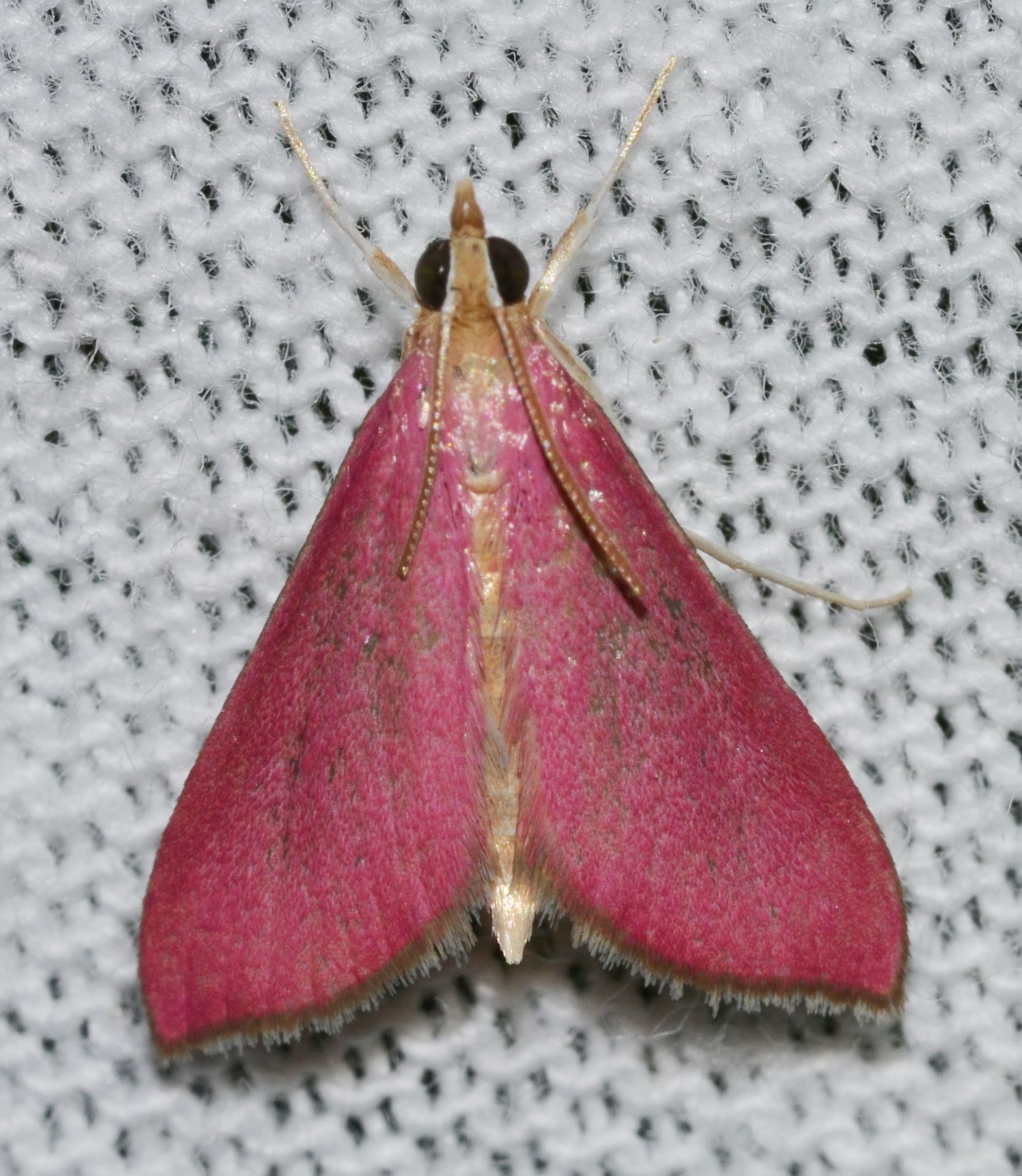
Pyrausta inornatalis is a small crambid native to North America, first described in 1885. are characterized by uniformly reddish-pink forewings without markings. The has established non-native in Japan since 2019 and in southwestern France since 2024. Larvae feed primarily on Salvia species, boring into unopened flower buds.
Pronunciation
How to pronounce Pyrausta inornatalis: /pɪˈraʊstə ɪˌnɔːrnəˈteɪlɪs/
These audio files are automatically generated. While they are not always 100% accurate, they are a good starting point.
Identification
Distinguished from similar Pyrausta by the complete absence of markings on the forewings—uniform reddish pink without spots, bands, or -spots. The combination of unmarked pink forewings with pale gray hindwings having pink outer margins is diagnostic. Larvae recognized by their presence within Salvia flower buds, translucent green body with spotted pattern, and brown with five stemmata.
Images
Distribution
Native to North America: United States (Arizona, California, Florida, Arkansas, Kansas, Louisiana, Missouri, Oklahoma, Tennessee, Texas, Alabama, Illinois, Oregon, Georgia, Kentucky, Mississippi, North Carolina, South Carolina, Virginia, West Virginia) and Mexico. Introduced and established in Japan since 2019. Introduced and established in southwestern France since 2024.
Seasonality
recorded on wing from March to November. Multiple per year have been observed in related Pyrausta .
Diet
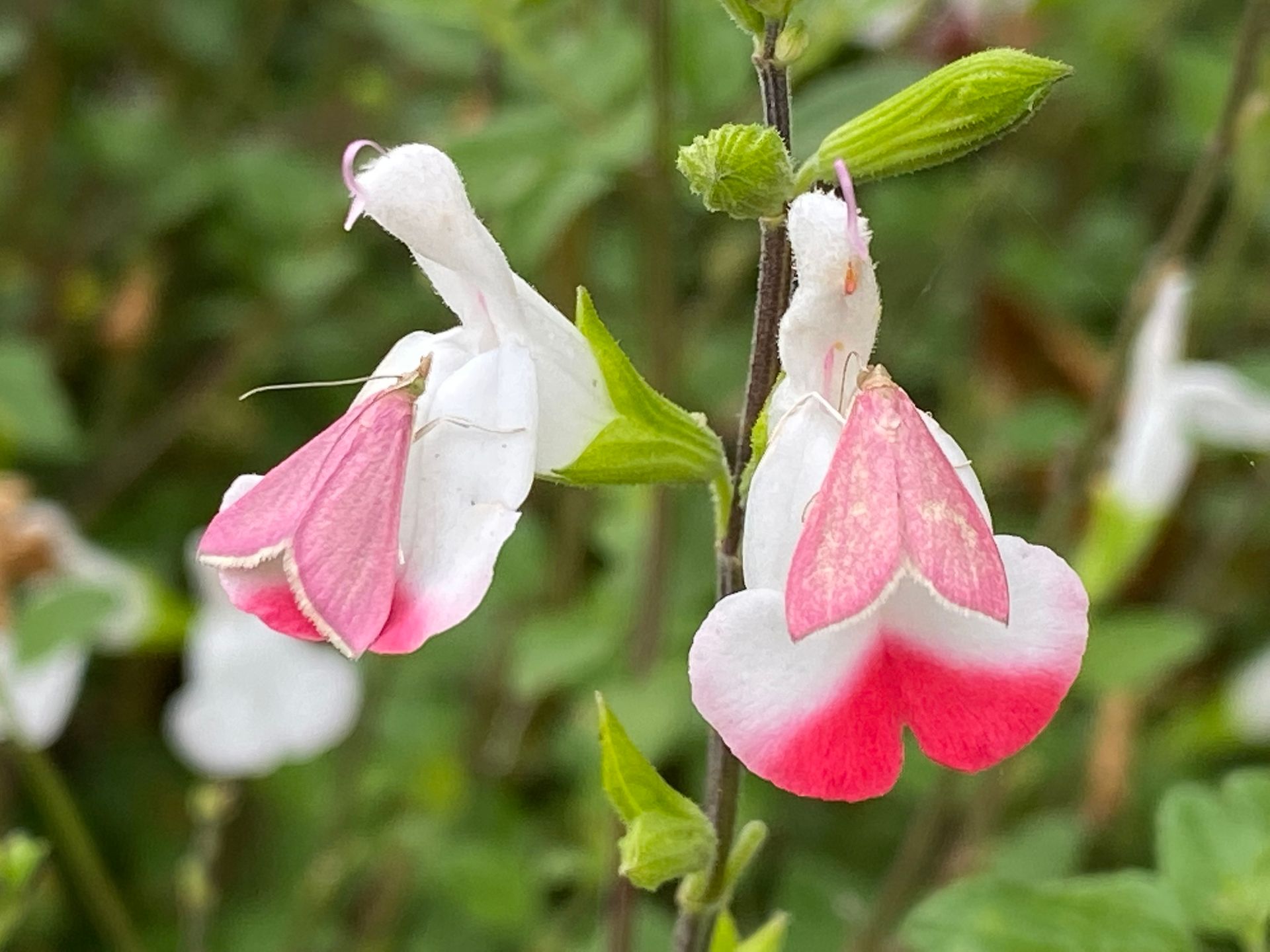
Larvae feed primarily on Salvia , including Salvia farinacea. They bore into unopened flowers near the base, consuming flowers and buds. Basil is a suspected alternative .
Host Associations
- Salvia farinacea - primary Larvae bore into unopened flowers and buds
- Salvia - primary Multiple within used
- Ocimum basilicum - suspected alternative Possible , not confirmed as primary
Life Cycle
Complete . laid in buds of leaves and flowers. Larvae develop within flower buds, feeding on florets and producing pellets. Fully grown larvae up to 11 mm. in slim cocoon approximately 8 mm. Multiple per year. active March through November.
Behavior
Larvae bore into unopened flower buds near the base, feeding internally on developing florets. Feeding produces small black pellets that accumulate in leaf axils and sepal bases. are active fliers with extended seasonal activity.
Ecological Role
Herbivore specializing on Salvia flowers. Larval feeding can destroy floral display, potentially reducing nectar resources for including hummingbirds, butterflies, bees, and other flower-visiting insects.
Human Relevance
Considered a garden pest on ornamental Salvia and Monarda. Larval feeding damages flower buds, reducing or eliminating blooming. Mechanical control by crushing caterpillars in flower is effective for small plantings. Organic containing Bacillus thuringiensis kurstaki or spinosad are used for larger ; caution required with spinosad due to to bees. Non-native established in Japan and France indicate potential for further spread as an .
Similar Taxa
- Pyrausta signatalisSimilar size and , but P. signatalis has raspberry-pink forewings with yellow spots or bands, whereas P. inornatalis forewings are uniformly reddish pink without any markings. P. signatalis larvae feed on Monarda rather than Salvia.
More Details
Invasive Spread
First recorded in Japan in 2019, now established as non-native. First observed in southwestern France in 2024, now considered established in Europe. Monitoring recommended for potential further spread.
Taxonomic Note
Originally described as Botis inornatalis before transfer to Pyrausta. Basionym Botis inornatalis Fernald, 1885.