
Pyrausta californicalis
Packard, 1873
California Pyrausta Moth, Mint Moth
Pyrausta californicalis is a small crambid native to western North America. are active throughout much of the year, with records spanning February to October. The is commonly known as the Mint Moth due to its larval association with Mentha species. It was first described by Alpheus Spring Packard in 1873.
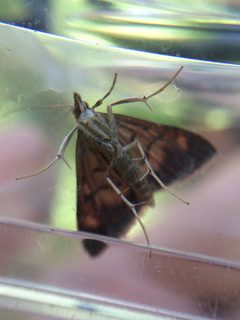
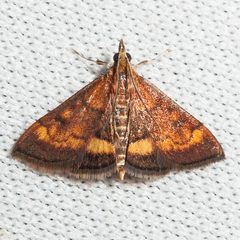
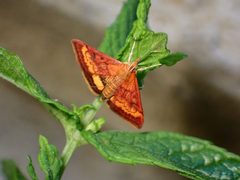
Pronunciation
How to pronounce Pyrausta californicalis: /pɪˈraʊstə ˌkælɪˌfɔrnɪˈkeɪlɪs/
These audio files are automatically generated. While they are not always 100% accurate, they are a good starting point.
Identification
The small size (approximately 13 mm wingspan) and western North American distribution help distinguish this from many eastern Pyrausta species. The 'Mint ' and association with Mentha may aid in field recognition where mint plants are present. are most readily identified by their seasonal activity pattern, with records spanning nearly the entire year. For definitive identification, examination of genitalia or molecular methods may be necessary, as external overlaps with related Pyrausta species.
Images
Habitat
Associated with supporting Mentha (mint) , which serve as larval plants. Specific habitat types are not documented, but mints typically occur in moist soils near water sources, in disturbed areas, and in cultivated settings.
Distribution
Western North America, recorded from British Columbia south through California. The distribution corresponds to the Pacific coastal and interior regions where suitable plants occur.
Seasonality
have been recorded on wing from February through October, indicating an extended period with possible multiple or continuous in favorable conditions.
Diet
Larvae feed on Mentha (mints). feeding habits are not documented.
Host Associations
- Mentha - larval Larvae feed on mint ; specific Mentha species not distinguished in sources.
Life Cycle
Not documented in detail. The extended period from February to October suggests multiple may occur annually. Larval development occurs on Mentha plants.
Behavior
Not documented in available sources.
Ecological Role
As a herbivore on Mentha, larvae contribute to herbivory pressure on mint . The may serve as prey for and , though specific interactions are not documented.
Human Relevance
May be encountered in gardens and agricultural settings where mint is cultivated. The 'Mint ' suggests recognition among gardeners and growers. No significant economic impact is documented, though larval feeding could potentially affect mint production.
Similar Taxa
- Pyrausta signatalisSimilar size and appearance as a crambid in the same ; both are associated with herbaceous perennials (P. signatalis with Monarda, P. californicalis with Mentha). P. signatalis occurs in eastern North America, while P. californicalis is western.
- Other Pyrausta speciesMany Pyrausta are small, similarly colored crambid requiring genitalia examination or association for reliable identification. Geographic range and host plant specificity are important distinguishing features.