
Pyrausta acrionalis
Walker, 1859
mint-loving pyrausta moth
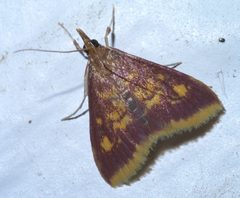
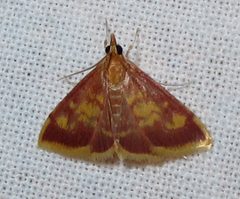
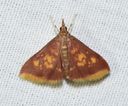
Pyrausta acrionalis, commonly known as the mint-loving pyrausta , is a small crambid moth native to eastern North America. have a wingspan of 14–18 mm. Larvae feed specifically on leaves of Mentha (mint) . The species is part of the snout moth , characterized by elongated mouthparts.
Pronunciation
How to pronounce Pyrausta acrionalis: //pɪˈraʊstə ˌækriˈoʊnælɪs//
These audio files are automatically generated. While they are not always 100% accurate, they are a good starting point.
Identification
Distinguished from similar Pyrausta by association with mint (Mentha) plants. are small with 14–18 mm wingspan. Specific wing patterns and coloration distinguishing it from are not documented in available sources. The 'mint-loving pyrausta ' reflects its host plant association, which may aid in field identification where mint is present.
Images
Habitat
Associated with supporting Mentha (mint) . Specific habitat requirements beyond plant presence are not documented.
Distribution
Eastern North America: recorded from Alabama, Georgia, Massachusetts, Mississippi, New Hampshire, New York, Ontario, Tennessee, Vermont, West Virginia, and Wisconsin.
Diet
Larvae feed on leaves of Mentha (mints). feeding habits are not documented.
Host Associations
- Mentha - larval plantLarvae feed on leaves
Ecological Role
Herbivore: larvae consume mint foliage. Specific ecological impacts or interactions beyond direct herbivory are not documented.
Human Relevance
May be encountered in gardens and agricultural settings where mint is cultivated. No significant economic or cultural importance documented. Not mentioned as a pest in available sources.
Similar Taxa
- Pyrausta signatalisSimilar and pattern ('raspberry pyrausta '), but associated with Monarda (beebalm) rather than Mentha (mint). P. signatalis larvae feed within flower buds causing blossom damage, whereas P. acrionalis larvae feed on mint leaves.
More Details
Taxonomic note
Originally described as Rhodaria acrionalis Walker, 1859; later transferred to Pyrausta.