
Hahncappsia pergilvalis
Hulst, 1886
Hahncappsia pergilvalis is a small crambid described by George Duryea Hulst in 1886. The has a wingspan of 20–26 mm and occurs across North America from Ontario through the northeastern and southwestern United States, extending south into central Mexico. are active from May through September. Larval association with maize (Zea mays) is suggested but not confirmed.
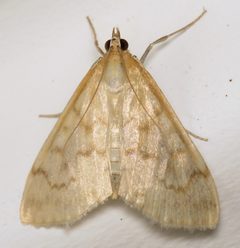
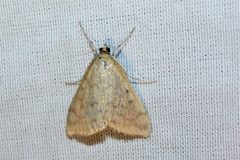
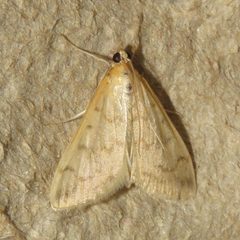
Pronunciation
How to pronounce Hahncappsia pergilvalis: /hɑnˈkæpsiə pɜrˈɡɪlvəlɪs/
These audio files are automatically generated. While they are not always 100% accurate, they are a good starting point.
Identification
Distinguished from by geographic distribution and period; precise diagnostic features require examination of genitalia. The small size and May–September adult activity period may help separate it from some sympatric Hahncappsia .
Images
Appearance
Small with wingspan of 20–26 mm. Specific coloration and pattern details are not documented in available sources.
Habitat
Specific preferences are not documented. Occurs in regions supporting maize , though this may reflect sampling rather than ecological requirement.
Distribution
North America: Ontario, Canada; northeastern and southwestern United States. Mexico: Federal District, Puebla, and Jalisco.
Seasonality
recorded on wing from May to September.
Host Associations
- Zea mays - possible larval Larval feeding on maize is suggested but not confirmed; may reflect unverified report or misidentification.
Human Relevance
Potential, unconfirmed association with maize raises possible agricultural concern, though no documented economic impact exists.
Similar Taxa
- Other Hahncappsia species share similar size range and general ; precise identification requires genitalia dissection.
More Details
Taxonomic history
Originally described as Botis pergilvalis Hulst, 1886; later transferred to Hahncappsia.
Data quality note
Larval and relationships remain poorly documented. The maize association cited in some sources lacks primary verification and should be treated as tentative.