
Lathrotelinae
Clarke, 1971
Spotted-costa Crambid Snout Moths
Genus Guides
1Lathrotelinae is a small of crambid comprising approximately 54 in six , distributed mainly in tropical regions. The subfamily was established by Clarke in 1971 but remained classified within Spilomelinae until phylogenetic studies in the mid-2010s demonstrated its distinctiveness. Larvae are root-feeders on monocotyledonous plants, with some species causing economic damage to cultivated palms and sugarcane.
Pronunciation
How to pronounce Lathrotelinae: //ˌlæθɹoʊˈtɛlɪniː//
These audio files are automatically generated. While they are not always 100% accurate, they are a good starting point.
Identification
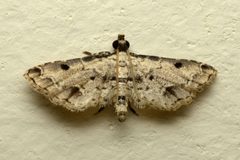
possess undulating wing outlines, lack chaetosemata on the imaginal , and have a completely reduced gnathos. Male genitalia are diagnostic: the bears a strongly spiculose 'manica' at its end. A key to using external and internal characters exists for the .
Images
Habitat
Tropical ; specifically environments containing palms and other monocotyledonous plants. Some occupy horticultural settings with imported palms.
Distribution
Primarily pantropical, with strongest representation in the Indomalayan and Australasian regions. Specific records include southernmost Kyushu (Japan), Southeast Asia, and the Neotropics. Several undescribed species are known from collections in the Indomalayan and Australasian regions.
Diet
Larvae feed on monocotyledonous plants, specifically in root tissues. Known include Areca Palm (Chrysalidocarpus lutescens), oil palms, and sugarcane.
Host Associations
- Chrysalidocarpus lutescens - larval Areca Palm; larvae develop in roots
- Elaeis - larval oil palms; occasional pest
- Saccharum - larval sugarcane; occasional pest
Life Cycle
Larvae develop within root tissues of plants. and occur from these root feeding sites.
Behavior
Larvae are concealed root-feeders. Some have been documented as colonizers of horticulturally imported palms, with human-mediated via plant trade.
Ecological Role
Root herbivore on monocotyledonous plants. Some function as agricultural pests of cultivated palms and sugarcane.
Human Relevance
Occasional pest of oil palm and sugarcane . Some are transported internationally via horticultural trade in palms, as documented by accidental import records.
Similar Taxa
- SpilomelinaeLathrotelinae was historically treated within Spilomelinae until separated based on phylogenetic evidence; distinguished by male genitalia with spiculose manica and second abdominal sternum synapomorphies
- AcentropinaePreviously suggested as close relative based on abdominal sternum synapomorphies, but genetic data refuted this relationship
- MusotiminaeGenetic phylogenetic studies identified Musotiminae as sister group to Lathrotelinae; both are fern-feeding or monocot-feeding crambid
- MidilinaeCladistic analysis based on morphological data recovered Lathrotelinae as sister group to Midilinae, corroborated by and larval feeding
More Details
Taxonomic history
Until the mid-2010s, Lathrotelinae was treated within Spilomelinae. The was formally recognized based on the misplaced position of Lathroteles obscura and related . The group name Lathrotelidae Clarke, 1971 was established as the valid name under the Principle of Priority.
Phylogenetic relationships
Molecular phylogenetic studies found Lathrotelinae to be sister to Musotiminae, while morphological cladistic analysis recovered it as sister to Midilinae. The was previously hypothesized to be related to Acentropinae based on abdominal sternum characters, but this was not supported by genetic data.
Undescribed diversity
The group remains poorly studied, with several additional awaiting description, particularly in the Indomalayan and Australasian regions.