
Evergestis funalis
Grote, 1878
Frosted Evergestis
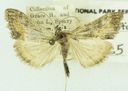
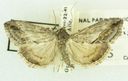
Evergestis funalis is a small crambid native to western North America, ranging from Alaska to the southwestern United States. The was described by Grote in 1878 and includes five recognized distributed across specific geographic regions. have a wingspan of 23–27 mm and are active from May through October. The 'Frosted Evergestis' refers to the pale, somewhat frosted appearance of the forewings.
Pronunciation
How to pronounce Evergestis funalis: /ɛ.vɛrˈdʒɛ.stɪs fjuːˈnɑː.lɪs/
These audio files are automatically generated. While they are not always 100% accurate, they are a good starting point.
Identification
Distinguished from other Evergestis by the combination of small size (23–27 mm wingspan), pale frosted forewing appearance with fine dark speckling rather than bold markings, and geographic restriction to western North America. Similar species Evergestis pallidata has more contrasting dark brown markings and occurs in eastern North America. Evergestis rimosalis shows more pronounced brown banding on forewings. Examination of genitalia may be required for definitive identification of worn specimens.
Images
Habitat
Found in open, dry including sagebrush steppe, grasslands, open woodlands, and montane meadows. Occurs from low elevations to subalpine zones. Associated with disturbed and natural open areas in western montane and intermountain regions.
Distribution
Western North America: Alaska, British Columbia (including Vancouver Island), Washington, Oregon, California, Nevada, Utah, Colorado, Arizona, and Idaho. Five recognized with restricted distributions: E. f. funalis (widespread), E. f. angelina (California), E. f. columbialis (British Columbia), E. f. insulalis (Vancouver Island), and E. f. wallacensis (Idaho).
Seasonality
active from May to October, with peak activity varying by elevation and latitude. Likely multivoltine in warmer parts of range, with extended period suggesting overlapping .
Behavior
. come to light. Larval unknown.
Ecological Role
likely serve as of low-growing herbaceous plants; ecological role of larvae unknown due to lack of plant documentation.
Human Relevance
No documented economic importance. Occasionally encountered by general naturalists and enthusiasts in western North America. Not a pest .
Similar Taxa
- Evergestis pallidataSimilar size and general appearance, but has more contrasting dark brown forewing markings and occurs in eastern North America rather than western regions.
- Evergestis rimosalisOverlaps in range but shows more pronounced brown transverse bands on forewings; E. funalis has finer, more diffuse speckling.
- Evergestis subterminalisSimilar pale coloration but typically larger with more distinct subterminal line on forewing.
More Details
Subspecies
Five recognized based on geographic distribution and subtle morphological differences: nominate E. f. funalis; E. f. angelina (California); E. f. columbialis (mainland British Columbia); E. f. insulalis (Vancouver Island); and E. f. wallacensis (Idaho). Subspecies descriptions by Munroe (1974) and Barnes & McDunnough (1914).
Larval Biology Gap
plants and larval remain undocumented despite the being described in 1878. This represents a significant knowledge gap for a relatively well-collected western North American .