
Dicymolomia metalliferalis
Packard, 1873
Dusky-patched Dicymolomia
Dicymolomia metalliferalis is a small crambid of western North America, described by Packard in 1873. have a wingspan of approximately 16 mm. The is notable for larval specialization on decaying lupine seed pods.
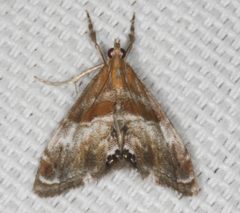
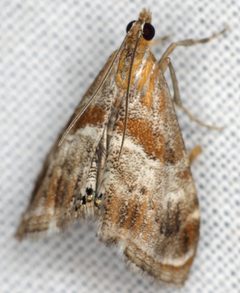
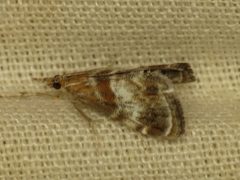
Pronunciation
How to pronounce Dicymolomia metalliferalis: /ˌdaɪsɪmoʊˈloʊmiə mɛˌtælɪˈfɛrəlɪs/
These audio files are automatically generated. While they are not always 100% accurate, they are a good starting point.
Identification
Small size (16 mm wingspan) distinguishes it from larger crambid . Geographic restriction to western North America aids in separating from eastern . Definitive identification requires genitalia examination or molecular analysis.
Images
Appearance
Small with wingspan of approximately 16 mm. Specific coloration and pattern details not documented in available sources.
Habitat
Associated with lupine-dominated plant where decaying seed pods provide larval substrate. Specific preferences for not documented.
Distribution
Western North America: southern Vancouver Island, Washington, Oregon, California, and western Arizona.
Diet
Larvae feed on decaying seed pods of Lupinus albifrons and Lupinus latifolius. feeding habits unknown.
Host Associations
- Lupinus albifrons - larval food sourcedecaying seed pods
- Lupinus latifolius - larval food sourcedecaying seed pods
Life Cycle
Complete with larval stage specialized on decaying lupine seed pods. Specific details of , pupal, and longevity not documented.
Ecological Role
Decomposer: larvae process decaying lupine seed pods, contributing to nutrient cycling in lupine-dominated .
Similar Taxa
- Other Dicymolomia speciesEastern North American overlap in general ; geographic separation is primary distinguishing feature.
More Details
Nomenclature
Described by Alpheus Spring Packard in 1873. placement in Glaphyriinae follows Catalogue of Life.