
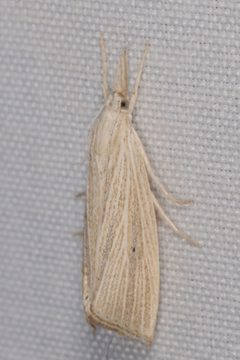
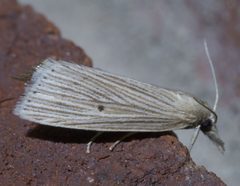
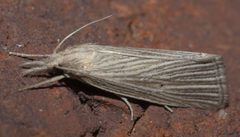
Eoreuma densellus
Zeller, 1881
Wainscot Grass-veneer
Pronunciation
How to pronounce Eoreuma densellus: /iːˈoʊriːmə dɛnˈsɛləs/
These audio files are automatically generated. While they are not always 100% accurate, they are a good starting point.
Identification
No specific diagnostic features distinguishing Eoreuma densellus from similar crambid are documented in available sources. The is part of the Eoreuma, which includes other grass-veneer moths.
Images
Habitat
preferences are not explicitly documented. Based on its and related , it likely occurs in grassland or grassy edge habitats.
Distribution
North America, recorded from Minnesota to Connecticut, south to Texas and Florida.
Seasonality
are on wing from April to October throughout most of the range. In Florida, adults are active year-round.
Life Cycle
details including , larval, and pupal stages are not documented in available sources.
Behavior
No specific are documented in available sources.
Similar Taxa
- Eoreuma loftiniBoth belong to the Eoreuma and share the 'grass-veneer'. E. loftini is a major agricultural pest of rice, sugarcane, and sorghum, whereas E. densellus has no documented pest status.
More Details
Taxonomic note
Eoreuma densellus is distinct from the congeneric Mexican rice borer (Eoreuma loftini), which is a significant agricultural pest. The two should not be confused given their vastly different economic importance.
Sources and further reading
- BugGuide
- Wikipedia
- GBIF taxonomy match
- iNaturalist taxon
- Catalogue of Life
- Stalk-boring insect pests - AgriLife Extension Entomology
- Insects that feed on developing grain in the head - AgriLife Extension Entomology
- Eoreuma-loftini - Entomology Today
- Eoreuma loftini Archives - Entomology Today
- Small Farms: On the Front Lines of Emerging Agricultural Pests
- A New Resource for Fighting the Mexican Rice Borer