
Microcrambus biguttellus
Forbes, 1920
gold-stripe grass-veneer, Gold-striped Grass-veneer
Microcrambus biguttellus is a small crambid commonly known as the gold-stripe grass-veneer. It was described by W.T.M. Forbes in 1920. The is widespread across eastern and central North America, with additional records from the Caribbean. are active primarily during late spring through summer, with year-round activity in southern Florida.
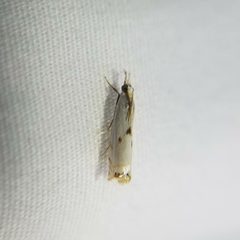
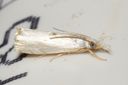
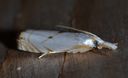
Pronunciation
How to pronounce Microcrambus biguttellus: /ˌmaɪ.kroʊˈkræm.bəs bɪˌɡʌtˈtɛl.əs/
These audio files are automatically generated. While they are not always 100% accurate, they are a good starting point.
Identification
The combination of small size (~8 mm forewing length), crambid , and the prominent gold stripe on the forewings distinguishes this from most similar grass moths. The specific epithet 'biguttellus' (meaning 'two small spots') may refer to additional markings, though the gold stripe is the most conspicuous field mark. Confirmation requires examination of genitalia or comparison with closely related Microcrambus species.
Images
Habitat
Grassland including meadows, prairies, lawns, and agricultural fields. Associated with grassy vegetation required for larval development.
Distribution
Eastern and central North America: recorded from Alabama, Florida, Georgia, Illinois, Indiana, Kentucky, Maine, Manitoba, Maryland, Massachusetts, Michigan, Minnesota, Mississippi, New Brunswick, New Jersey, New York, North Carolina, Nova Scotia, Ohio, Oklahoma, Ontario, Quebec, South Carolina, Tennessee, Texas, Vermont, West Virginia, and Wisconsin. Also recorded from Cuba and Puerto Rico.
Seasonality
on wing May through September in most of range; year-round in Florida.
Diet
Larvae feed on grasses.
Behavior
are and attracted to light. Larvae are grass-feeders, likely living within grass stems or thatch in typical crambine fashion.
Ecological Role
Herbivore in grassland ; larvae contribute to nutrient cycling through consumption of grass .
Human Relevance
Minor potential as a pest of turfgrass or pasture, though not documented as economically significant. Attracted to artificial light sources.
Similar Taxa
- Other Microcrambus species contains multiple small, similar grass-veneer moths; precise identification often requires genitalia dissection.
- Fissicrambus mutabilisSimilar size and in grasslands; distinguished by wing pattern details and genitalia.
More Details
Taxonomic history
Described by William Trowbridge Merrifield Forbes in 1920. The Microcrambus was established to accommodate small crambine with distinctive genitalia and reduced wing venation compared to Crambus sensu stricto.