
Chilo plejadellus
Zincken, 1821
Rice Stalk Borer Moth
Chilo plejadellus, commonly known as the rice stalk borer , is a crambid moth described by Zincken in 1821. It is a significant agricultural pest whose larvae tunnel into rice stalks. The has been studied for its chemistry, with (Z)-13-octadecenal identified as the primary female-produced attractant. Field applications of synthetic have proven effective for monitoring.
Pronunciation
How to pronounce Chilo plejadellus: /ˈkaɪloʊ plɛdʒəˈdɛləs/
These audio files are automatically generated. While they are not always 100% accurate, they are a good starting point.
Identification
Distinguished from similar stalk-boring crambids by association with rice and geographic distribution. Accurate identification of larvae within stems requires dissection or molecular methods; may be distinguished by genitalia examination. The responds specifically to (Z)-13-octadecenal in field traps, which can aid detection.
Images
Appearance
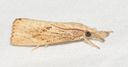
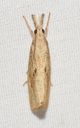
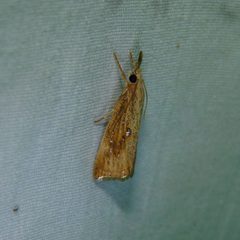
have a wingspan of 20–40 mm and body length of 25–40 mm. The exhibits typical crambid with narrow, elongated wings.
Habitat
Rice-growing areas, including cultivated rice fields and associated agricultural wetlands. Larvae inhabit the interior of rice stalks.
Distribution
North America: documented from Illinois, Ontario, Quebec, Pennsylvania, Georgia, Louisiana, Wisconsin, Texas, Arkansas, and Vermont. Monitoring studies confirm established in Texas, Louisiana, and Arkansas, with Louisiana experiencing the highest recorded damage levels.
Diet
Larvae feed internally on rice (Oryza sativa) stalks. Specific feeding habits of are not documented.
Host Associations
- Oryza sativa - larval larvae tunnel into rice stalks, causing damage documented primarily in Louisiana
Behavior
Males are attracted to females via the (Z)-13-octadecenal. Synthetic traps captured males at 90% the of virgin female traps and exceeded black light trap effectiveness for detection.
Ecological Role
Agricultural pest of rice crops. levels can reach damaging densities in rice-growing regions, particularly in Louisiana.
Human Relevance
Economic pest requiring monitoring and management in rice production. Synthetic -based trapping systems have been developed for detection and monitoring, offering advantages over light trapping methods.
Similar Taxa
- Other Chilo speciesSeveral congeneric are stalk borers in grasses and cereals; accurate identification requires examination of genitalia or larval molecular analysis
- Other Crambinae stalk borersLarvae of many crambine tunnel in grass stems; -level identification of larvae is difficult without dissection
More Details
Pheromone Research
The (Z)-13-octadecenal was identified from extracts of female abdominal tips. Field testing in Louisiana demonstrated practical applications for synthetic in monitoring programs.
Sources and further reading
- BugGuide
- Wikipedia
- GBIF taxonomy match
- iNaturalist taxon
- Catalogue of Life
- Chilopoda | Blog
- Eight weird and wonderful species to celebrate World Animal Day
- Jewel of the forest: New electric blue tarantula species discovered in Thailand
- Allelochemicals From Soybean Affecting Pseudoplusia Includens (Walker) Biology and Pheromone From Chilo Plejadellus Zinken Mediating C. Plejadellus Sexual Behavior (Looper).