
Parapoynx seminealis
Walker, 1859
floating-heart waterlily moth
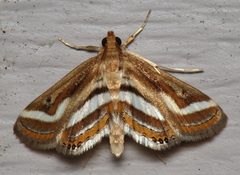
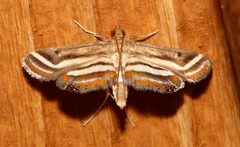
Parapoynx seminealis is a small crambid in the Acentropinae, commonly known as the floating- waterlily moth. It was described by Francis Walker in 1859. The is associated with aquatic and has been recorded from multiple states in eastern North America.
Pronunciation
How to pronounce Parapoynx seminealis: /ˌpærəˈpɔɪnks ˌsɛmɪniˈælɪs/
These audio files are automatically generated. While they are not always 100% accurate, they are a good starting point.
Identification
The can be distinguished from other Parapoynx species by its association with floating- plants (Nymphoides) and its specific geographic distribution in eastern North America. The small wingspan and aquatic preference are useful field characters.
Images
Appearance
Small with a wingspan of approximately 20 mm.
Habitat
Aquatic environments supporting floating- plants (Nymphoides ). Larvae are associated with the aquatic leaves of their plants.
Distribution
Eastern North America: recorded from Florida, Georgia, Massachusetts, Mississippi, New Hampshire, Rhode Island, South Carolina, Texas, and Vermont.
Seasonality
have been recorded on wing year-round in the southern part of the range.
Diet
Larvae feed on leaves of Nymphoides aquatica and probably Nymphoides cordata or Nymphoides peltata.
Host Associations
- Nymphoides aquatica - larval food plantlarvae feed on leaves
- Nymphoides cordata - probable larval food plantprobable based on association
- Nymphoides peltata - probable larval food plantprobable based on association
Life Cycle
Larvae are aquatic and feed on submerged or floating leaves of plants. period extends year-round in southern portions of range, suggesting overlapping or continuous development in favorable conditions.
Behavior
are active throughout the year in warmer regions. Larvae are aquatic and feed on living plant tissue.
Ecological Role
Herbivore on aquatic plants in the Nymphoides. Role in aquatic not well documented.
Human Relevance
No significant documented economic or cultural importance. Occasionally observed by naturalists and enthusiasts.
Similar Taxa
- Other Parapoynx speciesSimilar ; distinguished by plant specificity and geographic distribution
More Details
Taxonomic history
Described by Francis Walker in 1859. Placed in Acentropinae, a group of crambid with aquatic or semi-aquatic larvae.