
Neargyractis
Lange, 1956
Species Guides
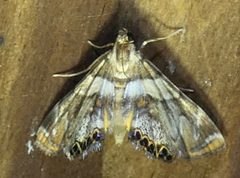
1- Neargyractis slossonalis(Dimorphic Leafcutter Moth)
Neargyractis is a of aquatic in the Crambidae, Acentropinae. The genus was established by W.H. Lange in 1956 during a revision of North American aquatic moths. It contains at least eight described distributed primarily in the Americas.
Pronunciation
How to pronounce Neargyractis: //nɪˌɑːrɡɪˈræktɪs//
These audio files are automatically generated. While they are not always 100% accurate, they are a good starting point.
Identification
Neargyractis are distinguished from related aquatic crambid by genitalic characters and wing pattern features detailed in Lange's 1956 revision. The genus is placed in Acentropinae based on aquatic larval adaptations and morphological traits.
Images
Habitat
Aquatic environments; larvae are adapted to life in water. Specific microhabitat preferences vary by .
Distribution
Primarily distributed in the Americas. have been recorded from the United States, Central America, and South America.
Life Cycle
Aquatic larvae; complete with , larval, pupal, and stages. Larvae possess adaptations for underwater respiration and locomotion typical of Acentropinae.
Behavior
are . Larvae are aquatic and exhibit associated with underwater feeding and respiration.
Ecological Role
Larvae function as primary consumers in freshwater , contributing to nutrient cycling and serving as prey for aquatic .
Similar Taxa
- PetrophilaBoth are aquatic Acentropinae with similar ; distinguished by genitalic and larval characters per Lange (1956)
- ParargyractisClosely related aquatic in the same ; Neargyractis separated by Lange based on structural differences in male genitalia and wing venation
More Details
Taxonomic history
Lange (1956) revised the aquatic of North America and established Neargyractis to accommodate previously placed in other . The type species is Neargyractis plusialis (Herrich-Schäffer, 1871).
Species diversity
Eight are currently recognized: N. alemundalis, N. caesoalis, N. fulvicinctalis, N. holocycla, N. moniligeralis, N. plusialis, N. serapionalis, and N. slossonalis.