
Geina tenuidactylus
(Fitch, 1854)
Himmelman's plume moth, berry plume moth
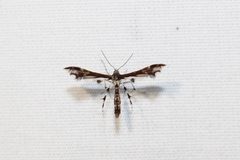
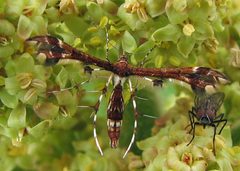
Geina tenuidactylus, commonly known as Himmelman's or berry plume moth, is a small plume moth in the Pterophoridae. It was first described by Asa Fitch in 1854. The is widely distributed across North America, from eastern states to the West Coast. Larvae feed on Rubus species including thimbleberry and blackberries, while have been observed feeding on dogbane flowers. The wingspan measures approximately 17 mm.
Pronunciation
How to pronounce Geina tenuidactylus: /ˈdʒaɪnə ˌtɛn.ju.dækˈtaɪləs/
These audio files are automatically generated. While they are not always 100% accurate, they are a good starting point.
Identification
A small ( Pterophoridae) with wingspan around 17 mm. Distinguished from other Geina by genitalia examination; external alone may not reliably separate it from . The divided, feathery wing structure is characteristic of the family. Larval association with Rubus species may aid identification in the field.
Images
Appearance
Small with wingspan of approximately 17 mm. Like other plume moths, wings are divided into feathery plumes. Specific coloration and pattern details are not well documented in available sources.
Habitat
supporting plants in the Rubus, including areas with thimbleberry (Rubus parviflorus) and blackberry . Associated with open, disturbed areas, woodland edges, and agricultural settings where host plants occur.
Distribution
North America. Documented from Mississippi, Massachusetts, New York, Delaware, Maryland, West Virginia, Illinois, Ontario, Colorado, Nevada, and California. Distribution appears to span eastern deciduous forests, Great Lakes region, Great Plains, and western montane and coastal areas.
Diet
Larvae feed on buds and leaves of Rubus parviflorus (thimbleberry) and both wild and cultivated blackberries (Rubus ). have been observed feeding on dogbane (Apocynum) flowers.
Host Associations
- Rubus parviflorus - larval food plantthimbleberry; larvae feed on buds and leaves
- Rubus - larval food plantwild and cultivated blackberries
- Apocynum - food sourcedogbane flowers; nectar source
Ecological Role
Herbivore on Rubus ; may contribute to natural pruning or of plants. nectar-feeding on dogbane suggests potential minor role in pollination of that plant.
Human Relevance
Minor agricultural relevance due to larval feeding on cultivated blackberries. Not considered a major pest. Of interest to lepidopterists and naturalists.
Similar Taxa
- Geina periscelidactylusCongeneric with similar ; reliable separation requires examination of genitalia or detailed wing venation
- Geina sheppardiAnother Geina with overlapping range and plant associations; external similarity necessitates dissection for definitive identification
- Other Pterophoridae members share divided wing structure; Geina are generally smaller than many other and associated with Rubus
More Details
Taxonomic note
The epithet is sometimes encountered as 'tenuidactyla' in older sources, but 'tenuidactylus' is the accepted spelling per current nomenclatural standards.
iNaturalist rank discrepancy
iNaturalist lists this as 'complex' rather than , possibly reflecting ongoing taxonomic uncertainty or cryptic diversity within the group.