
Calephelis muticum
Swamp Metalmark
Calephelis muticum, known as the swamp metalmark, is a small riodinid with a restricted distribution across wetlands of the upper Midwest, Ohio Valley, Ozark Mountains, and parts of Arizona. The is globally vulnerable (G3) and endangered in Illinois, with small, isolated colonies scattered across ten states. It is distinguished from the northern metalmark (Calephelis borealis) by preference, wing , and plant associations. Conservation concerns center on habitat loss from wetland conversion, , , and fire suppression.
Pronunciation
How to pronounce Calephelis muticum: //ˌkæləˈfiːlɪs ˈmjuːtɪkəm//
These audio files are automatically generated. While they are not always 100% accurate, they are a good starting point.
Identification
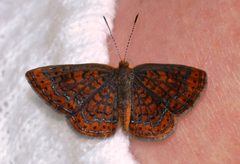
Distinguished from the northern metalmark (Calephelis borealis) by: wetland versus dry preference; association with swamp thistle versus roundleaf ragwort as plant; and subtle wing differences. The metallic silver spots and lines on the hindwings, combined with the red-brown ground color and small size, separate it from most other North American butterflies.
Images
Appearance
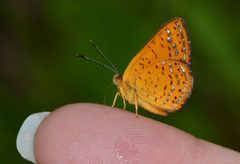
have small wings (wingspan 2.4–3 cm) colored red-brown and orange with silver and black markings. The hindwings bear rows of small, metallic spots and lines. The is orange and gray. Wing fringes sometimes display checkered marks. Males have pointed forewings; females have slightly more rounded forewings.
Habitat
Wetlands with abundant vegetation, particularly those supporting Cirsium (swamp thistle, Carolina thistle, tall thistle). Prefers low, grassy, moist environments.
Distribution
Upper Midwest United States, Ohio Valley, Ozark Mountain range, and parts of Arizona. Scattered small colonies across ten states.
Seasonality
in the North reproduce once between June and August. In the South, two occur between late spring and early fall.
Diet
Larval plants: Cirsium muticum (swamp thistle), Cirsium carolinianum (Carolina thistle), and Cirsium altissimum (tall thistle). feeding habits not explicitly documented in sources.
Host Associations
- Cirsium muticum - larval Swamp thistle; primary plant
- Cirsium carolinianum - larval Carolina thistle
- Cirsium altissimum - larval Tall thistle
Life Cycle
are laid on the undersides of plant leaves. Caterpillars have a green body with black spots and wispy white hairs, resembling tiger moth caterpillars in appearance. Later instars overwinter. and timing varies by latitude.
Ecological Role
; herbivore in larval stage. Part of wetland .
Human Relevance
Subject to conservation concern due to rarity and loss. Listed as endangered in Illinois. Threatened by habitat conversion, , , and illegal collection. Conservation efforts focus on habitat preservation and management, including promotion of plant abundance.
Similar Taxa
- Calephelis borealisFormerly considered ; distinguished by dry open preference, roundleaf ragwort plant, and subtle wing differences
More Details
Taxonomic History
Formerly considered the same as the northern metalmark until Wilbur S. McAlpine determined C. muticum to be distinct based on , wing, and dietary differences.
Conservation Status
G3 (globally vulnerable) by NatureServe standards; endangered in Illinois. Threats include fire suppression (direct harm to larvae but necessary for maintenance), livestock grazing, overutilization from illegal collection, habitat degradation from residential development, , and including garlic mustard, Japanese honeysuckle, bush honeysuckle, Japanese stilt grass, non-native buckthorns, native raspberries, and gypsy moth defoliation.