
Apodemia duryi
(Edwards, 1882)
Organ Mountain metalmark, Mexican metalmark, Dury's Metalmark
Apodemia duryi is a of in the Riodinidae, native to the southwestern United States and adjacent Mexico. The species is named after its collector, W. Dury, and is primarily associated with dry, rocky in mountain ranges. are active during the warmer months and are known to visit flowers for nectar.
Pronunciation
How to pronounce Apodemia duryi: /ˌæ.poʊˈdiː.mi.ə ˈdʊr.i.aɪ/
These audio files are automatically generated. While they are not always 100% accurate, they are a good starting point.
Identification
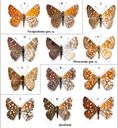
Distinguished from other Apodemia by combination of geographic range, plant associations, and specific wing pattern elements. A. duryi occurs in the Organ Mountains and adjacent ranges of southern New Mexico and northern Mexico, overlapping partially with A. palmeri but generally at higher elevations. The species shows less extensive orange on the forewings compared to A. palmeri. Accurate identification often requires examination of genitalia or association with documented larval host plants.
Images
Appearance
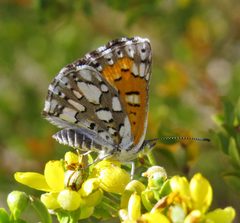
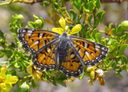
Medium-small with characteristic metalmark patterning. Wings typically display orange-brown ground color with darker markings and metallic spots or bands, typical of the Riodinidae . Wing margins often show checkered or spotted patterns. are clubbed with white tips. The exhibits in pattern intensity, with males generally showing brighter metallic markings.
Habitat
Dry, rocky slopes and canyons in mountain ranges, typically in pinyon-juniper woodland, oak scrub, and adjacent grassland . Associated with limestone and gypsum substrates. Elevation range approximately 1,200–2,400 meters.
Distribution
to the southwestern United States and adjacent northern Mexico. Core range includes the Organ Mountains of southern New Mexico, with scattered records from the Guadalupe Mountains and other nearby ranges. Extends southward into the Sierra Madre Oriental of northern Mexico (Chihuahua and Sonora).
Seasonality
active from late spring through early fall, with peak typically June–August. Single or partial second depending on elevation and seasonal conditions. stage presumed to be larva or pupa, though not well documented.
Host Associations
- Ceanothus species - larval Documented larval plants in the Rhamnaceae , particularly C. fendleri and related in the mountains of southern New Mexico
- Eriodictyon angustifolium - nectar source observed nectaring at flowers of this and other available blooming plants in
Life Cycle
laid singly on plant leaves or stems. Larvae feed externally on host foliage, likely through summer months. presumably occurs in leaf litter or soil. emerge following spring warming, with possible second in late summer at lower elevations. Detailed studies are lacking.
Behavior
are rapid, low-flying butterflies that stay close to the ground and vegetation. Males perch on rocks or low vegetation to await females. Both sexes visit flowers for nectar, particularly during mid-morning hours. Adults frequently rest with wings closed, displaying cryptic undersurface patterning.
Ecological Role
serve as of regional flora. Larvae function as herbivores on Ceanothus, with likely limited impact on plant due to low . Serves as prey for insectivorous birds, lizards, and predatory insects.
Human Relevance
Minor interest to collectors and regional naturalists. No significant economic importance. Potential for intact pinyon-juniper and oak scrub in the northern Chihuahuan Desert region.
Similar Taxa
- Apodemia palmeriOverlaps in range and ; distinguished by more extensive orange on forewings and generally lower elevation preference
- Apodemia hypoglaucaSimilar size and pattern; occurs in overlapping ranges but distinguished by wing pattern details and plant preferences
- Apodemia walkeriOccurs in adjacent Mexican ranges; distinguished by male genitalia and subtle wing pattern differences
More Details
Etymology
The specific epithet duryi honors W. Dury, who collected the from the Organ Mountains of New Mexico in the late 19th century
Conservation Status
Not formally assessed by IUCN; appears secure within core range but vulnerable to loss from pinyon-juniper woodland conversion and climate change in mountain sky islands
Taxonomic History
Originally described as Lemonias duryi by Edwards in 1882; transferred to Apodemia following revision of Riodinidae classification