
Ganyra josephina
(Godart, 1819)
Giant White
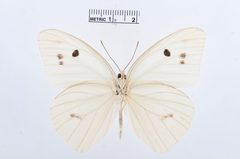
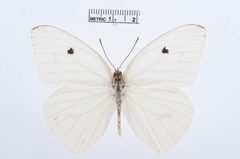
Ganyra josephina, commonly known as the giant white, is a in the Pieridae. It is one of the larger in its family, with a wingspan reaching up to 96 mm. The species exhibits considerable geographic variation across its broad range, with five recognized distributed from the southern United States through the Caribbean and Central America to northern South America. are primarily active in late summer and autumn in the northern parts of their range.

Pronunciation
How to pronounce Ganyra josephina: //ˈɡænɪrə dʒoʊsəˈfaɪnə//
These audio files are automatically generated. While they are not always 100% accurate, they are a good starting point.
Identification
Distinguished from other white butterflies (Pieridae) by its notably large size—wingspan of 73–96 mm exceeds most . The black wing markings are restricted to the and marginal areas, creating a cleaner white appearance compared to heavily spotted . In southern Texas, occur from September to December, later than many sympatric Pieridae. The species can be separated from the similar Ascia monuste (great southern white) by larger size and different wing pattern; from Glutophrissa drusilla (Florida white) by the more extensive black markings at the wing apex.
Images
Habitat
Open, dry, subtropical forests and adjacent disturbed areas. The favors semi-arid environments with scattered tree cover rather than dense forest or completely open .
Distribution
Native to the Neotropical and southern Nearctic regions. Range extends from southern Texas through Mexico, Central America, and the Caribbean to northern South America (Venezuela, Trinidad). occupy distinct regions: G. j. josephina on Hispaniola; G. j. josepha in southern Texas, Mexico, Guatemala, Honduras, and Nicaragua; G. j. krugii in Puerto Rico and Mona Island; G. j. janeta in Venezuela and Trinidad; G. j. paramaryllis in Jamaica.
Seasonality
are on wing from September to December in southern Texas. Activity periods vary across the range; in tropical portions of the distribution, adults may be present year-round with peaks during dry seasons.
Diet
feed on flower nectar from a variety of weeds and garden plants including , Eupatorium, and Bougainvillea. Larvae feed on older leaves of Capparidaceae .
Host Associations
- Capparidaceae - larval food plantlarvae feed on older leaves
- Lantana - nectar source
- Eupatorium - nectar source
- Bougainvillea - nectar source
Life Cycle
Complete with , larva, pupa, and stages. Larval development occurs on Capparidaceae plants, with larvae specifically feeding on older leaves rather than new growth.
Ecological Role
function as when visiting flowers for nectar. Larvae are herbivores that consume leaves of Capparidaceae, potentially influencing plant in localized .
Human Relevance
Occasionally encountered in gardens where visit ornamental flowers for nectar. Not considered an agricultural pest. Former G. j. menciae (Cuban white) was elevated to status as Ganyra menciae, reflecting taxonomic refinement in the group.
Similar Taxa
- Ganyra menciaeFormerly treated as G. j. menciae; now recognized as distinct based on morphological and geographic differentiation
- Ascia monusteOverlaps in range and ; distinguished by smaller size and different wing pattern with more extensive dark markings
- Glutophrissa drusillaSympatric in some areas; smaller with reduced black markings compared to G. josephina
More Details
Subspecies diversity
The exhibits notable geographic variation with five recognized . The former subspecies G. j. menciae from Cuba has been separated as its own species, Ganyra menciae, indicating ongoing taxonomic refinement in this group.
Nectar feeding specialization
show preference for nectar from weedy and ornamental plants, suggesting to disturbed and anthropogenic within their native range.