
Neonympha
Hübner, 1818
satyr butterflies
Species Guides
3- Neonympha areolatus(Georgia Satyr)
- Neonympha helicta(Helicta Satyr)
- Neonympha mitchellii(Mitchell's Satyr)
Neonympha is a of satyrid butterflies occurring in the Nearctic and Neotropical regions. The genus contains several recognized , including the endangered Mitchell's satyr (Neonympha mitchellii) with its two : the nominate form in Michigan prairie fens and the Saint Francis satyr (N. m. francisci) restricted to North Carolina. These butterflies exhibit strong specificity to wetland environments, particularly those with sedge vegetation.


Pronunciation
How to pronounce Neonympha: /niː.oʊˈnɪmfə/
These audio files are automatically generated. While they are not always 100% accurate, they are a good starting point.
Identification
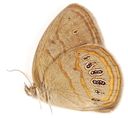
Members of this can be distinguished from other satyrine butterflies by their combination of Nearctic/Neotropical distribution and association with wetland . Specific identification to level requires examination of wing pattern details and geographic location; the endangered N. m. francisci and N. m. mitchellii are separated by range and subtle morphological differences.
Images
Habitat
Wetland , particularly those dominated by sedges (Carex spp.). For N. m. francisci: beaver-created wetlands and seepage areas at Fort Bragg, North Carolina, maintained by beaver activity and military training disturbances. For N. m. mitchellii: prairie fens in Michigan.
Distribution
Nearctic and Neotropical regions. N. m. francisci is restricted to Fort Bragg Military Installation, North Carolina, USA. N. m. mitchellii occurs in Michigan prairie fens. Other in the have broader distributions in the Americas.
Host Associations
- Carex spp. - vegetationSedges provide critical structure; plant associations for larval feeding require confirmation
Behavior
Strong site fidelity has been documented in N. m. francisci, with remaining near natal wetlands. structure consists of small, isolated subpopulations with limited between patches.
Human Relevance
Subject of active conservation research due to endangered status of N. mitchellii . The Saint Francis satyr has been studied for landscape corridor effects on and viability. restoration efforts have been evaluated for their effectiveness in creating population sources versus unintended sinks.
Similar Taxa
- ParyphthimoidesFormerly included N. nerita, now recognized as Paryphthimoides poltys; separation based on taxonomic revision
- EuptychiaNeonympha is currently treated as a synonym of Euptychia in some taxonomic databases (GBIF, Catalogue of Life), though this classification remains in flux
More Details
Taxonomic Status
The Neonympha has a contested taxonomic status. GBIF and Catalogue of Life list it as a synonym of Euptychia Hübner, 1818, while NCBI and iNaturalist maintain it as a valid genus. This reflects ongoing revisionary work in Satyrinae .
Conservation Status
Neonympha mitchellii is federally endangered in the United States. The two different threats: N. m. francisci is restricted to a single military installation, while N. m. mitchellii occupies fragmented prairie fen in Michigan.
Sources and further reading
- BugGuide
- Wikipedia
- GBIF taxonomy match
- iNaturalist taxon
- NCBI Taxonomy
- Catalogue of Life
- Landscape Conservation for Rare Insects | Bug Squad
- Distribution, Population Structure and Habitat Use of the Endangered Saint Francis Satyr Butterfly, Neonympha Mitchellii Francisci
- Habitat Use by the Federally Endangered Mitchell's Satyr Butterfly (Neonympha mitchellii mitchellii) in a Michigan Prairie Fen