
Coenonympha tullia california
Westwood, 1851
California Ringlet
Coenonympha tullia california is a of the Common Ringlet , historically found in low-elevation areas of central and northern California. According to long-term monitoring by UC Davis professor Art Shapiro, this subspecies was regionally extirpated from the Sacramento Valley and surrounding lowlands by 2007, becoming one of several butterfly to disappear from Shapiro's study transect between Chico and Stockton. The decline is attributed to climate change disrupting cues and exposure, particularly neonicotinoids. The subspecies exemplifies broader patterns of butterfly collapse documented across North America.


Pronunciation
How to pronounce Coenonympha tullia california: /ˌsɛˌnoʊˈnɪmfə ˈtʌliə ˌkælɪˈfɔːrniə/
These audio files are automatically generated. While they are not always 100% accurate, they are a good starting point.
Identification
Difficult to distinguish from other C. tullia without geographic context and expert examination. Historical identification relied on collection locality in low-elevation central and northern California. Now effectively unidentifiable in the wild within its former core range due to regional extirpation.
Images
Appearance
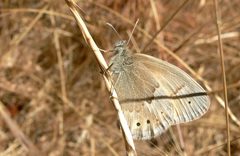
Medium-sized satyrine with rounded wings. surface brown with variable eyespot pattern on hindwings; surface typically shows more prominent ocelli. california historically distinguished by phenotypic traits associated with low-elevation California , though specific diagnostic features require expert examination.
Habitat
Historically occupied low-elevation grasslands and open in the Sacramento Valley and adjacent foothills. Associated with areas supporting larval grasses. Specific microhabitat requirements poorly documented.
Distribution
Formerly widespread in low-elevation areas of central and northern California from approximately Chico to Stockton. Now regionally extirpated from this core range; current status of any remaining unknown. GBIF records indicate broader North American and European presence for the , but california is to California.
Seasonality
Multi-brooded; period historically extended through much of the warm season. Specific undocumented due to collapse prior to detailed study.
Human Relevance
Serves as a case study in climate-driven insect collapse. Its 2007 regional extirpation from the Sacramento Valley was documented through one of the longest continuous monitoring programs in North America (Art Shapiro, UC Davis, 1972–present). The illustrates how -temperature mismatches disrupt facultative decisions, leading to population failure.
Similar Taxa
- Coenonympha tullia other subspeciesMorphologically similar; distinguished historically by geographic range in low-elevation California rather than discrete phenotypic characters
More Details
Regional extirpation
Art Shapiro's monitoring data show the California Ringlet persisted longer than co-occurring declining (Field Crescent, Great Copper, Large Marble), surviving until 2007 before disappearing from all low-elevation study sites.
Climate mechanism
Shapiro attributes the decline to -temperature decoupling: warmer temperatures require longer nights to induce , but photoperiod remains fixed by calendar date. This mismatch disrupts the facultative diapause decision critical for multi-brooded survival.
Sources and further reading
- BugGuide
- GBIF taxonomy match
- Where Are All the Butterflies? | Bug Squad
- Can You Name California's State Insect? | Bug Squad
- Going Native: Do You Know the Native Bees of California? | Bug Squad
- Bohart Museum: Learn about California's State Insect on UC Davis Picnic Day | Bug Squad
- The Buzz on California Agriculture Day | Bug Squad
- How to Become a California Master Beekeeper | Bug Squad