
Victorinini
Scudder, 1893
Peacock Butterflies and Allies
Genus Guides
2Victorinini is a tribe of brush-footed butterflies in the Nymphalinae, established by Scudder in 1893. The tribe comprises four : Anartia, Metamorpha, Napeocles, and Siproeta. These genera were transferred from the tribe Kallimini in the early 2000s based on molecular phylogenetic evidence that resolved paraphyly in the former classification. Some evidence suggests Siproeta may be with respect to Napeocles.


Pronunciation
How to pronounce Victorinini: //ˈvɪktɔrɪˌnaɪni//
These audio files are automatically generated. While they are not always 100% accurate, they are a good starting point.
Identification
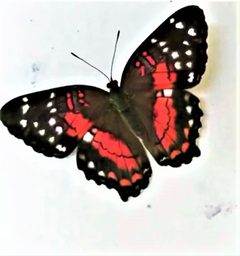
Members of Victorinini can be distinguished from related Nymphalinae tribes by wing patterns featuring prominent eyespots (ocelli) on the wing surfaces, a trait particularly pronounced in Siproeta and Anartia. The tribe shares the reduced, brush-like forelegs characteristic of the Nymphalidae. Molecular markers and larval distinguish Victorinini from the historically related Kallimini.
Images
Habitat
in this tribe occupy tropical and subtropical regions, including forest edges, clearings, and disturbed . Anartia species frequent open wet areas and river margins. Metamorpha occurs in Neotropical forests.
Distribution
Human Relevance
Several , particularly in the Siproeta (peacock butterflies), are popular in houses and live exhibits due to their large size, striking eyespot patterns, and relative ease of captive rearing. Anartia species serve as model organisms in ecological and evolutionary studies.
Similar Taxa
- KalliminiHistorically included the same now placed in Victorinini; distinguished by molecular and subtle differences in wing venation and larval .
- MelitaeiniRelated tribe whose paraphyly with respect to the former Kallimini contributed to the reclassification that established Victorinini as a separate tribe.