
Speyeria nokomis
(Edwards, 1862)
Nokomis fritillary
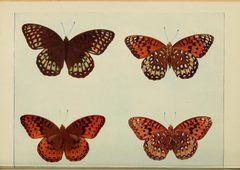
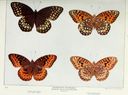
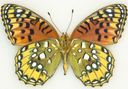
Speyeria nokomis, the Nokomis fritillary, is a North American in the Nymphalidae. The has a highly specialized relationship with its plant, with larvae feeding exclusively on northern bog violet (Viola nephrophylla). It is currently recognized with nine , including the imperiled Carson Valley silverpot butterfly (S. n. carsonensis), which has experienced significant declines. Conservation efforts focus on restoration through propagation of its obligate host plant.
Pronunciation
How to pronounce Speyeria nokomis: /ˈspɛɪəriə noʊˈkoʊmɪs/
These audio files are automatically generated. While they are not always 100% accurate, they are a good starting point.
Images
Habitat
Associated with wetland supporting its obligate plant Viola nephrophylla, including agricultural seeps, isolated springs, and riparian meadows. The S. n. carsonensis occupies riparian meadows, agricultural seeps, and isolated springs in Carson Valley, with riparian sites comprising 58% of occupied habitats.
Distribution
North America. The nominate occurs across western North America. The subspecies S. n. carsonensis is restricted to Carson Valley, where 62 sites with or potentially suitable have been surveyed.
Diet
Larva feeds exclusively on northern bog violet (Viola nephrophylla). diet not specified in available sources.
Host Associations
- Viola nephrophylla - obligate larval northern bog violet; sole confirmed food source for larvae
Life Cycle
Females lay on or near plants. Larvae hatch and feed on Viola nephrophylla before entering hibernation. Development resumes in spring, with and following. Specific timing not documented for this .
Human Relevance
Subject of conservation concern due to loss and declines. The S. n. carsonensis has experienced an 88% decline in historic subpopulations. Habitat restoration efforts include propagation of Viola nephrophylla for reintroduction programs. Livestock grazing affects approximately 50% of known sites, representing the primary anthropogenic threat.
Similar Taxa
- Speyeria cybeleBoth are large orange and black fritillary butterflies in the Speyeria with spotted undersides, but S. cybele is larger (wingspan 2.25–4 inches), has a broader distribution across northern North America, and uses different violet as larval .
- Speyeria atlantisSimilar size and coloration; both are Speyeria fritillaries. S. atlantis has been studied for visual navigation , but differs in plant associations and geographic distribution.
More Details
Subspecies diversity
Nine are currently recognized: S. n. apacheana, S. n. caerulescens, S. n. carsonensis, S. n. coerulescens, S. n. nigrocaerulea, S. n. nitocris, S. n. nokomis, S. n. valesinoalba, and S. n. wenona. The subspecies S. n. carsonensis is of particular conservation concern.
Conservation status
The Carson Valley silverpot (S. n. carsonensis) is considered imperiled. Between 2004–2005, 30 new subpopulations were discovered, but this represented an 88% decline from historic subpopulation numbers. Water diversions affect 7 known sites.
Sources and further reading
- BugGuide
- Wikipedia
- GBIF taxonomy match
- Catalogue of Life
- UC Davis Seminar: 'Insect Conservation in an Uncertain Future' | Bug Squad
- Bohart Museum Butterfly Donor Chuck Hageman Leaves a Lasting Legacy | Bug Squad
- Two other orange and black butterflies: Variegated fritillary, Euptoieta claudia, and great spangled fritillary, Speyeria cybele — Bug of the Week
- Speyeria atlantis Archives - Entomology Today
- The Eyes Have It: How Butterflies Navigate to Suitable Habitat
- USPS Issues Butterfly Postage Stamp
- Seed production and propagation of northern bog violet (Viola nephrophylla) for Nokomis fritillary (Speyeria nokomis) butterfly habitat restoration
- Improving conservation and management of the imperiled Carson Valley silverpot butterfly Speyeria nokomis carsonensis (Lepidoptera: Nymphalidae) based on rapid assessments of distribution, habitat, and threats