
Anaea troglodyta
(Fabricius, 1775)
Florida leafwing, Portia, Florida goatweed butterfly, Jamaican tropical leafwing, Cuban red leaf
Species Guides
1- Anaea troglodyta floridalis(Florida Leafwing)
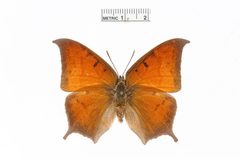
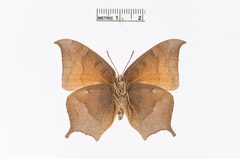
A Nymphalidae with a wingspan of 76–90 mm, found in southern Florida and throughout the Caribbean. The exhibits seasonal , with distinct dry-season and wet-season forms. Larvae feed on Croton species, while consume rotting fruit, , and fluids. Taxonomic status is contested: some authorities recognize over 230 species in the Anaea, while others (following Lamas 2004) treat all as a single species, Anaea troglodyta.
Pronunciation
How to pronounce Anaea troglodyta: /əˈneɪ.ə ˌtrɒɡ.ləˈdaɪtə/
These audio files are automatically generated. While they are not always 100% accurate, they are a good starting point.
Identification
Distinguished from other Anaea by geographic range and seasonal form pattern. In Florida, the A. t. floridalis is recognized by some authorities. Identification to subspecies level requires examination of genitalia and geographic provenance. Similar leafwing butterflies in the same may overlap in range on Caribbean islands; dissection or molecular analysis may be necessary for definitive identification where multiple forms occur sympatrically.
Images
Habitat
Tropical and subtropical environments in southern Florida and Caribbean islands. Associated with plant Croton linearis in Florida, where it occurs in Miami-Dade County preserves and Everglades National Park.
Distribution
Southern Florida (USA); Caribbean islands including Jamaica, Cuba, Cayman Islands, Puerto Rico, St. Thomas, St. Kitts, Antigua, Montserrat, Guadeloupe, and others. The A. t. aidea ranges from Arizona through Mexico to Rica; A. t. andria occurs from Texas and Nebraska east to West Virginia and Georgia.
Seasonality
active year-round with seasonal forms: dry-season form October–April, wet-season form May–October. Timing corresponds to regional wet/dry seasonal patterns in tropical .
Diet
Larvae feed on Croton cascarilla and Croton linearis (Euphorbiaceae). feed on rotting fruit, , and fluids.
Host Associations
- Croton cascarilla - larval plant
- Croton linearis - larval plantPrimary in Florida; federally endangered A. t. floridalis depends on this plant in Miami-Dade County preserves
Life Cycle
Complete with , larva, pupa, and stages. Specific details of egg , site, and time not documented in available sources.
Behavior
exhibit seasonal , altering wing between dry and wet seasons. This phenotypic plasticity is presumed adaptive but specific consequences have not been quantified.
Ecological Role
Larval herbivore on Croton ; may contribute to nutrient cycling through consumption of decaying organic matter. Pollination role, if any, is unknown.
Human Relevance
The Florida (A. t. floridalis) is federally endangered, with conservation efforts focused on preserving Croton linearis plant in Miami-Dade County. Subject of ecological study in Everglades National Park. Popular among enthusiasts in southern Florida and Caribbean.
Similar Taxa
- Other Anaea speciesOver 230 have been historically recognized in the ; many are geographically isolated on Caribbean islands. Lamas (2004) synonymized all under A. troglodyta, but this remains contested. Where ranges overlap, identification requires expert examination.
More Details
Taxonomic controversy
The Anaea has undergone extensive taxonomic revision. Lamas (2004) proposed treating all Anaea as a single , Anaea troglodyta, rejecting over 230 previously described species. This view is not universally accepted, and many sources continue to recognize or full species. The Florida population is variously treated as A. t. floridalis or a distinct species.
Conservation status
The Anaea troglodyta floridalis is federally endangered in the United States. Its survival depends on protection of Croton linearis plants in fragmented Miami-Dade County preserves and Everglades National Park.
Sources and further reading
- BugGuide
- Wikipedia
- GBIF taxonomy match
- iNaturalist taxon
- NCBI Taxonomy
- Catalogue of Life
- Uncategorized | Blog - Part 45
- A new cave-dwelling reef coral discovered in the Indo-Pacific | Blog
- Notes on the Status and Ecology ofAnaea troglodyta floridalis(Nymphalidae) in Everglades National Park
- Distribution ofCroton linearisin Miami-Dade County Preserves with Potential for Supporting the Federally Endangered ButterfliesStrymon acis bartramiandAnaea troglodyta floridalis