
Strymon istapa
(Reakirt, 1866)
Mallow Scrub-Hairstreak, Mallow Hairstreak, Dotted Hairstreak, Hewitson's Hairstreak
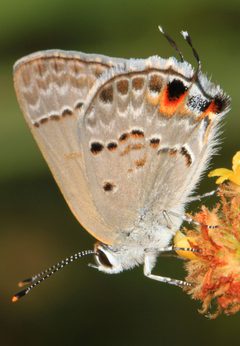
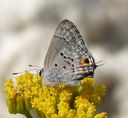
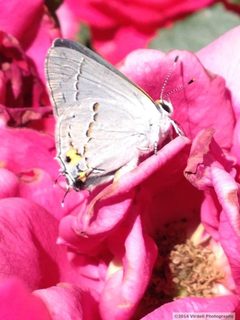
Strymon istapa is a widespread found in xeric across the southern United States, Central America, and parts of the Caribbean. It is notably adaptable to human-altered landscapes, frequently occurring in rural and suburban areas with open fields or overgrown weeds resulting from land clearing. The exhibits a distinctive behavioral trait of rubbing its hindwings together, presumably to draw attention to -mimicking on the hindwing margin. Multiple reflect its association with mallow vegetation and its spotted wing pattern.
Pronunciation
How to pronounce Strymon istapa: //ˈstrɪmɒn ɪsˈtɑːpə//
These audio files are automatically generated. While they are not always 100% accurate, they are a good starting point.
Identification
The can be distinguished by -mimicry located on the outer margin of the hindwing, a feature it draws attention to through wing-rubbing . The "dotted " refers to spotted wing patterns, though specific diagnostic markings require closer examination. As a member of the hairstreak group within Lycaenidae, it possesses the typical slender body and small tail-like projections on the hindwings characteristic of the .
Images
Habitat
Primarily occupies xeric (dry) including open fields, scrublands, and areas with overgrown vegetation. Shows notable for human-disturbed environments, readily colonizing rural and suburban areas where land clearing has created patches of weeds and open ground. Associated with mallow vegetation (Malvaceae), which likely serves as larval plant.
Distribution
Southern United States, Central America, parts of the Caribbean including Cuba and Grand Cayman, and rarely in South America. The ' range spans a broad latitudinal gradient from temperate North America through tropical regions.
Seasonality
activity pattern. Specific periods vary across its extensive geographic range, with multiple likely in warmer southern portions and more restricted seasons in northern areas.
Host Associations
- Malvaceae - larval plantAssociation inferred from ; specific plant not documented in provided sources
Behavior
frequently rub their hindwings together, a presumed to attract attention to the -mimicking on the hindwing outer margin. This may function as a deflection strategy, drawing attacks toward the wing margins rather than vital body parts. activity with adults active during daylight hours.
Human Relevance
Serves as an for response to disturbance, thriving in human-modified landscapes where native vegetation has been cleared. Its presence in suburban and rural areas demonstrates how some adapt to anthropogenic habitat changes.
Similar Taxa
- Strymon melinusGray Hairstreak shares and general ; differs in coloration and preferences, favoring more mesic environments and different plants
- Other Strymon speciesMultiple occur in overlapping ranges; precise identification requires examination of hindwing spot patterns and marginal arrangements
More Details
Taxonomic Note
NCBI lists authority as (Reakirt, 1866) while some sources cite 1867; basionym Thecla istapa reflects historical placement in the Thecla before reclassification to Strymon
Conservation Status
Not considered threatened; widespread distribution and adaptability to disturbed suggest stable , though local impacts from habitat loss and use in agricultural areas may affect specific populations
Sources and further reading
- BugGuide
- Wikipedia
- GBIF taxonomy match
- iNaturalist taxon
- NCBI Taxonomy
- Mary Louise Flint's Article in The Acorn: 'Butterflies in Decline' | Bug Squad
- Bug Eric: Breaking: Mexican Silverspot Butterfly Sighted in Colorado
- Bug Eric: Hilltopping
- Bug Eric: City Nature Challenge 2023 Recap
- Bug Eric: Losing the Pine Rocklands
- Bug Eric: September 2010