
Satyrium saepium
(Boisduval, 1852)
Hedgerow Hairstreak
Satyrium saepium, the hedgerow , is a small in the Lycaenidae to western North America. The exhibits significant geographic variation, with eleven recognized distributed across diverse from coastal California to interior montane regions. are active from spring through late summer and have been documented feeding on nectar from specific flowering plants. Larval development is tied to buckbrush (Ceanothus), a of flowering shrubs in the family Rhamnaceae.

Pronunciation
How to pronounce Satyrium saepium: /sætˈɪɹiəm ˈsip.iəm/
These audio files are automatically generated. While they are not always 100% accurate, they are a good starting point.
Identification
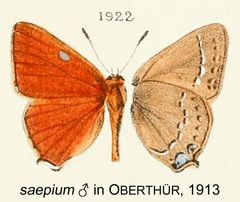
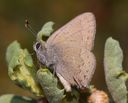
Distinguished from other western Satyrium by geographic range and association with Ceanothus plants. The combination of small size (26–30 mm wingspan), brown coloration, and grayish-brown surface with black spots separates it from similar hairstreaks in the region. identification requires examination of subtle differences in coloration and pattern, often restricted to specific geographic areas.
Images
Habitat
Associated with supporting buckbrush (Ceanothus ), including chaparral, coastal scrub, montane shrublands, and forest edges. Elevation range spans from sea level in coastal California to montane zones in the Rocky Mountains.
Distribution
Western North America: British Columbia south through California and Baja California; east through northern Arizona, northern New Mexico, Colorado, and Montana.
Seasonality
active April through September. period varies with elevation and latitude; lower elevations and southern portions of range show earlier and extended flight season.
Diet
feed on nectar from flowers including yerba santa (Eriodictyon) and wild buckwheats (Eriogonum). Larvae feed exclusively on buckbrush (Ceanothus , Rhamnaceae).
Host Associations
- Ceanothus - larval plantBuckbrush; of shrubs in Rhamnaceae
Life Cycle
Complete with , larva, pupa, and stages. Larvae feed on Ceanothus foliage. Specific details of site and stage not documented in available sources.
Ecological Role
function as when feeding on nectar. Larval herbivory on Ceanothus contributes to nutrient cycling in shrubland . Specific interactions with ants or other organisms not documented for this .
Human Relevance
Subject of interest to watchers and naturalists. Multiple described from California and adjacent states reflect historical collecting effort. Not known to be of economic importance.
Similar Taxa
- Satyrium semilunaHalf-moon hairstreak; overlaps in western range but associated with different (sagebrush steppe) and plants
- Satyrium curiosolusCuriously isolated ; recently recognized as distinct from isolated in Alberta, associated with silvery lupine rather than Ceanothus
More Details
Taxonomic note
GBIF lists Satyrium saepium as a synonym of Strymon saepium, reflecting ongoing generic reclassification in the tribe Eumaeini. NCBI and most North American sources maintain Satyrium.
Subspecies diversity
Eleven recognized, with eight to California, two to Utah, and one to Nevada. This pattern suggests significant geographic isolation and local , particularly in the California Floristic Province.