
Plebejus saepiolus
(Boisduval, 1852)
Greenish Blue, Icaricia saepiolus
Species Guides
1Plebejus saepiolus, commonly known as the Greenish Blue, is a small lycaenid native to North America. It is closely related to other Plebejus such as P. acmon (Acmon Blue) and P. melissa (Melissa Blue), with which it shares similar preferences and morphological features. The species has been documented across western and northern regions of North America including Canada and the northern United States. Like other members of its , it exhibits the characteristic blue coloration on the upper wing surfaces of males.
Pronunciation
How to pronounce Plebejus saepiolus: //plɛˈbeɪ.jəs seɪ.piˈoʊ.ləs//
These audio files are automatically generated. While they are not always 100% accurate, they are a good starting point.
Identification
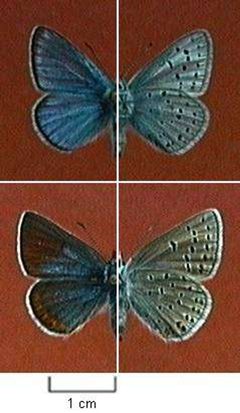
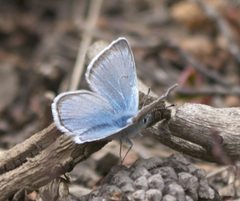
Distinguished from the closely related Acmon Blue (Plebejus acmon) and Melissa Blue (Plebejus melissa) by subtle differences in wing pattern and coloration. The Greenish Blue typically shows more greenish-gray tones on the wing surfaces compared to the Acmon Blue. Males display blue upper wing surfaces; females are generally darker with more extensive dark markings. Accurate identification often requires examination of ventral wing patterns, particularly the arrangement and shape of spots on the hindwing.
Images
Habitat
Found in open, sunny including meadows, grasslands, and disturbed areas. Associated with areas supporting its larval plants in the legume (Fabaceae).
Distribution
North America: documented from Alberta, Manitoba, and Saskatchewan in Canada; also recorded from Vermont and other northern United States. Western North American distribution includes montane and northern prairie regions.
Diet
Larvae feed on leguminous plants (Fabaceae).
Host Associations
- Fabaceae - larval plant
Life Cycle
Ecological Role
; participates in mutualistic relationship with ants during larval stage.
Similar Taxa
- Plebejus acmonAcmon Blue overlaps in range and ; distinguished by more gray-brown wing coloration and different spot patterns.
- Plebejus melissaMelissa Blue is closely related and similar in appearance; has been subject to extensive study regarding plant , particularly of alfalfa.