
Celotes
Godman & Salvin, 1899
Species Guides
1- Celotes nessus(Common Streaky-Skipper)
Celotes is a of skippers in the Hesperiidae, Pyrginae. It contains three recognized : Celotes limpia, Celotes nessus, and Celotes spurcus. These butterflies are found in North America, with species distributed across the southwestern United States and Mexico. The genus was established by Godman and Salvin in 1899.
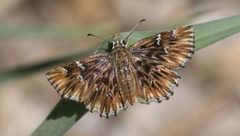
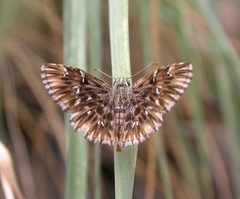
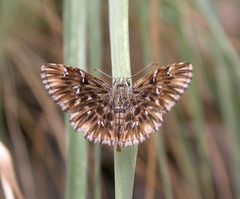
Pronunciation
How to pronounce Celotes: /kɛˈloʊtiːz/
These audio files are automatically generated. While they are not always 100% accurate, they are a good starting point.
Identification
Celotes are small to medium-sized skippers with relatively plain, dark brown to grayish wings. They lack the prominent checkered wing patterns seen in many related Pyrginae . The genus can be distinguished from similar skippers by subtle differences in wing shape and male genitalia structure; precise identification often requires examination of these internal structures. Celotes nessus, the most widespread species, has been noted for its muted coloration compared to other regional skippers.
Images
Habitat
in this occupy arid and semi-arid environments, including desert scrub, grasslands, and open woodland edges. They are associated with rocky slopes and canyon bottoms in the southwestern United States and adjacent Mexico.
Distribution
The ranges from the southwestern United States (Arizona, New Mexico, Texas) south through Mexico. Celotes nessus has the broadest distribution, extending from Arizona to central Mexico. Celotes limpia is restricted to a smaller range in Texas and northeastern Mexico. Celotes spurcus is known from southern Mexico.
Seasonality
are active during warmer months, with periods varying by and latitude. In the United States, activity generally occurs from spring through fall, with peak abundance in summer months.
Life Cycle
Like other Hesperiidae, Celotes undergo complete with , larva, pupa, and stages. Larval plants are grasses (Poaceae), though specific host records for individual Celotes species remain limited.
Behavior
have rapid, darting typical of skippers. They frequently perch on low vegetation or bare ground with wings held in the characteristic skipper posture—forewings partially open and hindwings spread flat.
Ecological Role
As larvae, they function as primary consumers feeding on grasses. may contribute to pollination while nectaring, though their ecological impact has not been quantified.
Similar Taxa
- AmblyscirtesSimilar small, plain brown skippers in Pyrginae; distinguished by differences in male genitalia and subtle wing pattern elements
- NastraAnother of plain-winged Pyrginae skippers with overlapping range; separation requires close examination of wing venation and genitalia
More Details
Taxonomic History
The was described by Frederick Godman and Osbert Salvin in 1899. Celotes spurcus was described as recently as 2008, indicating ongoing taxonomic refinement in this group.