
Celotes nessus
(Edwards, 1877)
Common Streaky-Skipper
Celotes nessus, commonly known as the common streaky-skipper, is a small in the Hesperiidae. It occurs in the southwestern United States and northern Mexico, with occasional strays reaching farther north. The is multivoltine, with active from spring through late summer. Larvae feed on mallow species, while adults visit flowers for nectar.
Pronunciation
How to pronounce Celotes nessus: //ˈsɛloʊtiːz ˈnɛsəs//
These audio files are automatically generated. While they are not always 100% accurate, they are a good starting point.
Identification
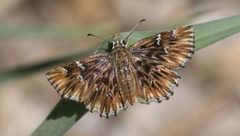
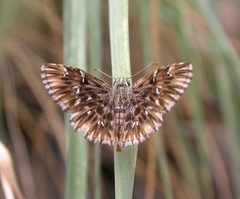
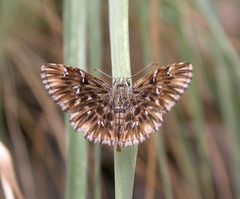
Distinguished from other Celotes and similar skippers by the streaky pattern of pale markings on dark brown wings. The small size (22–30 mm wingspan) and southwestern U.S./northern Mexico range help separate it from related species. The combination of dark ground color with linear pale streaks, rather than distinct spots or bands, is diagnostic. Antennal hooks and rapid, darting typical of skippers separate it from superficially similar .
Images
Appearance
Small with wingspan 22–30 mm. Upper wing surfaces are dark brown with pale streaks and spots creating a streaky pattern. Hindwings typically show a more uniform dark ground color with lighter markings. Body is relatively stout with large , typical of skippers. have hooked tips (apiculus), characteristic of Hesperiidae.
Habitat
Arid and semi-arid environments including desert grasslands, scrublands, and open areas with mallow plants. Associated with supporting Sphaeralcea and Sida filipes.
Distribution
Core range extends from southern Arizona, southern New Mexico, and western Texas south to northern Mexico. Rare strays documented in southern Oklahoma and northern Louisiana.
Seasonality
Multivoltine with several per year. on wing from March to September in Texas, with peak activity varying by locality and seasonal conditions.
Diet
Larvae feed on several mallow (Malvaceae), specifically Sphaeralcea species and Sida filipes. feed on flower nectar.
Host Associations
- Sphaeralcea - larval plantMultiple of this mallow used
- Sida filipes - larval plantSpecific mallow documented as
Life Cycle
Complete with , larva, pupa, and stages. Multiple per year (multivoltine). Specific details of egg placement, larval instars, and sites not documented in available sources.
Behavior
Rapid, darting typical of skippers. visit flowers for nectar. Larval feeding occurs on plant leaves.
Ecological Role
as (nectar feeding). Herbivore as larva (folivory on mallows). Serves as prey for various including birds, spiders, and predatory insects.
Human Relevance
Occasional subject of watching and photography. No significant economic impact documented; neither a pest nor a of conservation concern based on available information.
Similar Taxa
- Other Celotes speciesSimilar size, shape, and general appearance; distinguished by specific wing pattern details and genitalia
- Other Pyrginae skippers in southwestern U.S.Overlap in and general ; streaky pattern of C. nessus is distinctive
More Details
Nomenclature
Originally described as Pholisora nessus by Edwards in 1877; later transferred to Celotes. The basionym Pholisora nessus is occasionally encountered in older literature.
Vagrancy
The is noted for occasional long-distance , with rare records well outside the core range in Oklahoma and Louisiana.