
Pholisora catullus
(Fabricius, 1793)
common sootywing, roadside rambler
Pholisora catullus, commonly known as the common sootywing or roadside rambler, is a small in the Hesperiidae. The has experienced significant declines in parts of its range, including regional extinction from Davis, California by 2007. It occurs from the central United States south to central Mexico, with vagrant individuals occasionally reaching more northern areas. The species is not found in peninsular Florida.

Pronunciation
How to pronounce Pholisora catullus: /ˌfoʊlɪˈsɔːrə kəˈtʊləs/
These audio files are automatically generated. While they are not always 100% accurate, they are a good starting point.
Identification
Distinguished from other small dark skippers by its uniformly sooty, dark brown to black wing coloration without prominent light spots or bands. The roadside rambler moniker reflects its tendency to occur in disturbed, open along roadsides. Similar dark skippers in the region typically show more distinct pale markings or checkered patterns.
Images
Habitat
Open, disturbed including roadsides, fields, and weedy areas. Larval plants (Chenopodium album, Amaranthus, Celosia ) are common weeds of agricultural and environments, dictating habitat selection.
Distribution
Native to central United States, ranging south to central Mexico. Vagrant individuals or temporary documented in southern British Columbia, northern Michigan, southern Quebec, and southern Maine. Absent from peninsular Florida. Formerly present in California's Central Valley but regionally extinct from Davis by 2007; persists in West Sacramento.
Seasonality
Two per year in northern range, with active May to August. In Texas, adults on wing from March to November, reflecting longer season in southern portion of range.
Diet
Larvae feed on Chenopodium album (lamb's quarters), Amaranthus (amaranths), and Celosia species. nectar at flowers including dogbane, marjoram, oxalis, white clover, common milkweed, peppermint, and cucurbits (cucumber, melon).
Host Associations
- Chenopodium album - larval food plantweedy
- Amaranthus - larval food plant of weedy annuals
- Celosia - larval food plant including weedy
Life Cycle
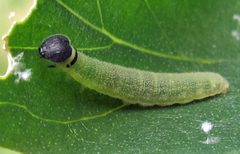
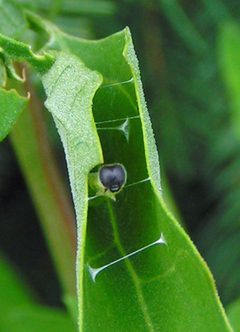
Two annually in northern part of range. laid on larval plants. Larvae feed on leaves of Chenopodium, Amaranthus, and Celosia. occurs in shelter on or near host plant. emerge and feed on nectar from diverse flowering plants.
Behavior
are rapid, low-flying skippers typical of the Hesperiidae. Readily visits flowers for nectar. The 'roadside rambler' reflects its tendency to fly along roadsides and open disturbed corridors.
Ecological Role
as through nectar feeding. Larvae function as herbivores on weedy plants in the Amaranthaceae and Chenopodiaceae. Serves as prey for various ; documented as for Ammophila pictipennis.
Human Relevance
Subject of long-term monitoring by researchers including Art Shapiro, whose data contributed to documenting regional extinction in Davis, California. Used as for decline and climate change impacts. No significant agricultural or economic impact; generally considered innocuous.
Similar Taxa
- Other Pholisora speciesSimilar small, dark skipper ; require examination of genitalia or detailed wing pattern analysis for definitive separation
- Amblyscirtes speciesSmall grass-skippers with dark coloration; typically show more distinct pale spots or bands on wings
- Thorybes speciesDark skippers with more robust build; usually display contrasting light spots on forewings
More Details
Population Decline
Documented by UC Davis researcher Art Shapiro as having declined precipitously in California's Central Valley. Formerly bred on pigweed (Amaranthus) within 200 feet of Storer Hall at UC Davis; no longer found within Davis city limits as of 2007. Decline attributed to climate change, use (neonicotinoids), and alteration. Named as of particular concern in Shapiro's 2025 Science paper on declines across the United States.
Prey for Parasitoid Wasps
Caterpillars documented as prey for the thread-waisted wasp Ammophila pictipennis, which provisions its nest burrows with lepidopteran larvae including cutworms and this skipper .