
Hesperopsis gracielae
(MacNeill, 1970)
MacNeill's Sootywing, McNeill's Saltbush Sooty-wing
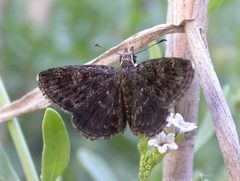
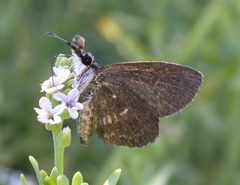
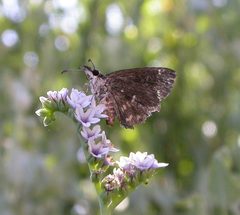
Hesperopsis gracielae is a spread-wing in the Hesperiidae. The is associated with saltbush in arid regions of western North America. It has been documented along the lower Colorado River floodplain, where its success is linked to soil moisture conditions of its plants. The species is known to use Atriplex lentiformis as a larval host plant.
Pronunciation
How to pronounce Hesperopsis gracielae: /hɛsˈpɛr.ə.pˌsɪs ɡrəˈsi.ə.laɪ/
These audio files are automatically generated. While they are not always 100% accurate, they are a good starting point.
Images
Habitat
Lower Colorado River floodplain; arid riparian and saltbush scrub . success has been observed to correlate with soil moisture levels of plants in conservation areas along the lower Colorado River.
Distribution
Central America and North America; specifically documented along the lower Colorado River floodplain in the southwestern United States.
Host Associations
- Atriplex lentiformis - plantLarval plant; host selection documented
Life Cycle
success associated with foodplant soil moisture conditions at lower Colorado River conservation areas.
Behavior
have been observed and documented along transects in field studies.
More Details
Nomenclature
Originally described as Pholisora gracielae MacNeill, 1970; currently classified in Hesperopsis. MONA/Hodges number: 3981.
Sources and further reading
- BugGuide
- Wikipedia
- GBIF taxonomy match
- iNaturalist taxon
- NCBI Taxonomy
- Macneill's Sootywing (Hesperopsis gracielae) (Lepidoptera: Hesperiidae) Behaviors Observed Along Transects
- Selection of Atriplex Lentiformis Host Plants by Hesperopsis gracielae (Lepidoptera: Hesperiidae)
- Geographic Distribution of Macneill's Sootywing (Hesperopsis gracielae) (Lepidoptera: Hesperiidae) Along the Lower Colorado River Floodplain
- Macneill's Sootywing (Hesperopsis gracielae, Family: Hesperiidae): Life History Success Associated with Foodplant's Soil Moisture at Lower Colorado River Conservation Areas